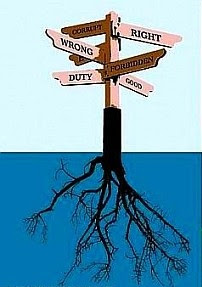
The Trouble with Branding

brandingSometimes when I see what other coaches write, it makes me want to run the other way. I’m not THAT, I tell myself, wanting nothing to do with the sort of aggressive over-the-top promises and platitudes I see some “life coaches” or “executive coaches” or business consultants using to promote themselves.

Other times, when I look back at what I’ve done all day for my job, whether it’s watching terrorism trials or Congressional hearings and fuming at the state of American politics, I want to scream. I don’t want to be THAT person either, immersed in and getting all worked up over awful things in the world I can’t control.

Of course, if I have some perspective, I can realize that these things all serve some purpose right now, whether it’s helping me find my way in a new field I enjoy, advocating for something I believe in, or just earning a living. But when I’m in the thick of whatever it is, or face embarking on a new project, those inclinations to define myself by what I’m doing at the moment can really get in my way.

Consultants are all about “branding” these days, and the importance of people creating a “personal brand” that tells the world who you are. The prevalence of social media and our “digital footprint” has intensified the pressure, but it even arises in the sort of cocktail-party conversations we have when we meet new people. Marketers will tell you to pull out your “elevator pitch” right then because it’s a perfect opportunity to try to convince someone to hire you — and you’d better not miss any opportunities. Plus there’s the general social pressure to label ourselves as something solid and impressive.

I think it’s exactly this kind of ubiquitous “branding” that leaves many people feeling stuck and hopeless. Lots of us have jobs we don’t love that pay the bills, for example, but we don’t want to “brand” ourselves by it. We’re not cattle. We have lots of other interests, and maybe we’re developing a whole new skill or talent or career on our own time. A public “brand” isn’t going to capture that. It could even limit it.

I was once told by a friend who’s a communications professional that I have a “great brand.” I was flattered – who knew I had a “brand” at all? – but it also had the effect of limiting me. Suddenly I felt like taking a different path I was considering would be foolishly wasting my “brand” – for whatever it’s worth.

The truth is, we’re not one thing, and the complex of our skills and interests and personalities don’t fit neatly into a label or a tagline. To try to cram ourselves into some set form means we’re cutting off other essential parts of ourselves. It prevents us from learning and trying new things, exploring latent talents and interests, and just generally from growing and expanding. It seems to me like a recipe for misery.

Many of my clients seem to struggle with this kind of self-branding pressure. A freelance writer, for example, has an assignment he thinks is stupid, but those assignments pay the bills so he can also do the writing he wants that, for now, at least, is not paying him. As soon as he sits down at his computer to start working on the assignment, though, he balks: I don’t want to do THIS, he thinks; I’m not THAT person, who writes this sort of idiocy. What have I done with my life? Now, he not only has an assignment to do that he doesn’t find interesting, but he’s blocked from getting started because he can’t get over the negative labels he’s slapped on himself for being the person doing it.

The other, related problem with branding is how it interacts with the human tendency, at least in Western culture, to view ourselves negatively. I make a mistake so I immediately call myself “stupid,” for example. Or I eat or drink too much and now I’m a person with no self-control. We tend to label ourselves negatively at every opportunity, and that labeling actually makes it much harder to change. Seeing ourselves as fixed and “branded” entities only digs us deeper into that hole.

Stephen Cope talks about this in his book, The Wisdom of Yoga, which I’ve written about here before. Instead of seeing human beings as fixed, solid entities, Cope explains, Yogis (much like Buddhists) discovered that we’re composed of many different “patterns of consciousness,” which may or may not fit well together. “It is partly the driven attempt to make all of the pieces fit nicely together that keeps us so often at right angles to life,” writes Cope. Yogis found that clinging to an idea of a unitary self causes suffering because it narrows our sense of who we are and makes us very small in comparison to the rest of the world. Now we have to defend “ourselves” against that world, and exert huge amounts of energy bolstering our egos in the face of it.

This can be particularly tiring when we’re dealing with parts of ourselves we don’t really like. If we see ourselves as a solid entity, then it’s extremely painful to confront our mistakes or bad habits. Because we see them as us. We take them very personally. As a result, we tend to avoid confronting those parts, and the habit continues.

If, on the other hand, we see ourselves as various and intersecting patterns of consciousness that are constantly growing and changing, then past mistakes or habits can feel a little less solid. They’re a pattern we’ve developed, not an essential part of our character. It’s not so scary now to look at them, to notice what triggers them, and to see how and where we can interrupt the chain reaction. And it’s only when you can see and accept that part of yourself without judgment, as Cope explains, that you can begin to take steps to change it.

What does this all have to do with branding? Branding seems to me to be a trend towards doing the opposite: a call to define and present ourselves as solid and unchanging entities, available on demand for perfect presentation and sale — and then to act accordingly. Just writing that makes me feel like I’m choking.

Of course, if you’re trying to start a new business or change one, developing a brand can help let people know what you offer. But personal branding is far more than that – it’s carefully crafting your own presentation to the world, which in turn can become how you lead your life. It’s turning yourself into a commodity available for sale in the marketplace, rather than acknowledging and relishing being a multi-faceted human being who has far more to offer than you probably realize.

In other words, branding is fine in its place, but it’s not you:  you’re much more. As Walt Whitman put it: “I am large, I contain multitudes.”
Writing Your Story Helps You Change It

your-story-mattersI guess it’s not surprising that writing about personal experiences has therapeutic value – it’s one reason people keep journals. But I was surprised by the wealth of evidence Tara Parker Pope cites in this article that backs that up, and even more interested in how certain kinds of writing seem to help people solve their own problems – or, to put it in a more positive way, helps them set a course toward achieving what they want.

Pope cites one practice that coaches at the Johnson & Johnson Human Performance Institute use with clients that sounds intriguing. Clients are asked to identify their goals, then write out why they haven’t achieved them. The clients tend to write the usual stories they tell themselves – which often involves pointing fingers at other people or towards outside circumstances they can’t control.

Afterwards, clients are asked to look back at what they’ve written, then edit their stories to produce a more honest assessment of what’s really in their way. In the second version of the story, they’re more likely to come up with reasons that involve the choices they’re making or attitudes or beliefs they’re harboring that they may not have been aware of. Confronting those truths leaves them better positioned to make a change.

It makes perfect sense. Our initial explanations tend to be somewhat defensive – we’re reluctant to look at our own contribution to a situation, because it’s usually a little painful to acknowledge our own responsibility. The result, though, as I see with many of my clients, is that people end up feeling stuck – wedged into some place they don’t want to be by forces they see as outside their control.

Working with a coach is one way of getting some perspective on all this: a good coach will encourage you to consider different perspectives on a given situation, and to confront some of what might be underlying your feeling of stuckness (if that’s a word) so you see your own role. But writing it all down is something you can do on your own, anytime. The commitment of writing forces us to tell our whole self-justification story from beginning to end. It then also allows us to see that story separately from ourselves, as just a story. Once it’s written down, we can step aside and look at it more objectively. And once we’ve gotten a little distance from it, we’re more likely to see what in that story is not really true. And it’s from there that real change can begin.

Finding Joy at Work

imagesI joined a meditation group in my neighborhood recently, and the other night the teacher’s talk was about Joy.

Joy. It’s not something many of us tend to think about much. We focus on getting work done, on what’s annoying us, on the onslaught of problems we need to solve or that we’re hearing about in the world, but joy is something that many of us – maybe especially New Yorkers – tend to overlook.

When do you experience joy?

Of course, there’s joy to be experienced in everyday life: in the enthusiastic face-lickings I get from my dog when I arrive home, in the savoring of a good meal or a good conversation or the company of good friends. But one thing I realized listening to this talk, which came after a particularly intense day at the office, was that I rarely experience joy at work.

As I reflected on my work (I’m talking about my office job, not my coaching work), I realized that so much of it is spent focusing on awful things going on in the world that it’s hard to even think of joy in that context. I imagine that’s true for lots of people working as advocates, whose job it is to focus on some problem in the world and try to fix it. But that itself creates a problem.

Joy is essential. It’s what motivates us, and allows us to appreciate our lives and the world around us. Without joy, can we really bring our full selves to anything we do, and can we really do a good job? I don’t think so. But most importantly, without joy, work will leave us feeling pretty miserable.

How do you cultivate joy at work when your job involves things that are inherently a bummer? That may be some big social justice issue or a problem in your neighborhood or your company or with a product. Whatever it is, the potential for joy may not be apparent.

I’ve been thinking about this a lot lately. When I work with coaching clients, there may be parts that are difficult, but I find joy in the interaction itself, and in the feeling that I’m helping somebody, even if just by listening and helping them reflect on what’s on their mind and what might be getting in their way. When I work as a legal advocate, though, there isn’t that immediate connection with another person, or that satisfaction at the end of a session. Instead, it’s a long, endless slog toward improving a long-term situation that really sucks. You may never see the outcome, and anyway, the outcome probably won’t be what you’re hoping for. Where’s the joy in that?

Still, I see a lot of value in people advocating collectively for justice or other kinds of social and political change. It’s important work that in the long run, can make a difference. But can it be joyful?

I’ve written before about the importance of making your work meaningful, setting your own goals and acknowledging your successes. But I’m talking here about the daily experience of a job, which is a little different. As an advocate, you may know you’re part of an important effort to, say, stop global warming, but that may not make lobbying a Republican Congress led by climate change-deniers to pass laws reducing carbon emissions any more joyful.

So I’ve decided to embark on an experiment. I’m going to dedicate myself to bringing joy into my work every day. It may be in making a point to have one really good conversation with a colleague in the office, or in writing an advocacy piece that I really put my heart into. It could just involve going out of my way to acknowledge the great work done by one of my colleagues – a kind of “sympathetic joy” as Buddhists would call it . (“Sympathetic joy” is taking pleasure in other people’s happiness or success.) If none of those are possibilities, maybe it’s just taking time out of the day to quietly savor a good lunch or cup of coffee or listen to some really good music. Whatever it is, it has to be something that I actually stop and notice as joyful in some way, whether the process itself or the outcome.

Consider trying this with me. Because no matter what our work may be, if we can’t find one thing a day in it to truly enjoy in it, then in the long run, we’re not going to be doing anyone very much good.

Skip the New Year’s Resolution

karma ethics.tree buddhist-network comNew Year’s resolutions seem to me like a recipe for disaster. Another commitment you make to yourself that you inevitably end up breaking. I’m going to exercise every day, or lose weight, or cut out alcohol, or always be nice to my family, or whatever. Then you slip up, and bam – you feel like shit again. The resolution goes out the window.

But I like the idea of living deliberately – in fact, I think it’s crucial to a happy and fulfilled and meaningful life. Being conscious of our actions and making deliberate choices seem like basic building-blocks for that. So how to reconcile?

To me, setting an “intention” rather than making a “resolution” seems a bit more promising. An intention is something you want, plan and hope to do, but when you slip, as you inevitably will, you just dust yourself off and get back on the path you’ve chosen. I know, they say the road to hell is paved with good intentions, but that seems to me more using the term “intention” as a cheap band-aid covering up a deep and massive delusion that you’re not dealing with. A true intention is something you set for yourself, because it’s something you truly and deeply want, and you use it as a compass to move forward. Sometimes you get lost and veer from the path, perhaps caught up by some shiny delusive object you encounter in the woods along the way. But the compass helps you eventually find your way back and steer your course again.

I think one key to living by “intention” without getting discouraged when we screw up is just acknowledging that we’re human, and change is difficult. I’ve been reading a terrific book by Stephen Cope, a yoga teacher and psychotherapist who writes about the intersection of Western psychology and the Eastern philosophy of yoga. (I also participated in a weekend workshop with him at the Kripalu Center for Yoga and Health in the Berkshires after Christmas.) In The Wisdom of Yoga: A Seeker’s Guide to Extraordinary Living, Cope explains this phenomenon as being part of what yogis call karma.

This isn’t the sort of oversimplified notion of karma we tend to hear about as determining your life because of something you did in your prior life as a dog or the idea that people are suffering through a vicious war or in some horrible refugee camp as just desert for something bad they did in their past lives. This is a much more subtle and, to me, convincing notion of karma that’s also backed up by Western psychology and contemporary neuroscience. It’s simply the idea that our actions and reactions to circumstances create patterns in our minds, and the longer those patterns continue, the more deeply they become embedded in our unconscious and the harder they are to change.

A child might react to abuse by withdrawing, for example, and withdrawal from other people at the first sight of conflict might become her unconscious pattern. For someone else addiction results – alcohol, drugs, food, whatever. We all do things to avoid pain, and those things become part of the patterns that shape our lives. So when as adults on New Year’s Eve we decide we’re all of a sudden going to stop doing that thing, good luck – karma or brain patterning or whatever you want to call it is going to make it very difficult.

The yogic approach to changing this, according to Cope – which is very much like the Buddhist approach, which grew out of yoga philosophy – is simply to begin to focus our attention on the chain of events that leads to the unwanted action. Without judging or condemning it, simply notice when the craving or withdrawing or whatever problematic action arises. What is happening at that moment? What is the underlying feeling you’re fleeing?

Continue to watch it. What happens next? Do you reach for a drink, a cookie, or walk out the door? Do you get angry and yell at someone, or pick up your phone and get absorbed in your Twitter or Facebook feed? Whatever it is, just start by observing it. We tend to be so judgmental of ourselves that we refuse even to witness this chain of events, because it causes us so much shame. But as Cope explains, “[w]hen we pare away judgment, something remarkable happens. We’re free, for the first time, to observe how the pattern really works.”

So the key is to approach this all with compassion. Recognize it’s not “you” that’s doing this, in the sense of some fixed sense of yourself as a bad person. It’s just a part of your patterning, and we all have patterns that make us suffer. Only by letting go of the judgment and being willing to look at those patterns can we truly see them, and then take steps to interrupt them.

I’m not saying this is easy. Last night I was feeling sick, and tired, recovering from some sort of a bug I’d caught after not getting enough sleep on New Year’s eve, which I was still angry at myself about.   When I feel shitty, my impulse is usually toward sugar. Preferably chocolate. While I usually try not to keep that stuff around, lots of it ended up in our house over the holidays, and it was calling to me. Fortunately, I was reading Cope’s book, and after a couple of chocolate kisses I reminded myself to slow down and just feel what I was feeling. Tired. Pain in my stomach. Feelings of regret and disappointment at having let myself get to this state, after having set all sorts of intentions to live more deliberately and be healthier. I let those feelings wash over me, and reminded myself to be compassionate about it all. I felt the urge to run away from them slowly dissipate. The need for chocolate melted away. I realized that what I really needed was to sleep. I went to bed soon after.

Obviously some habits are more difficult than this one, but the process is basically the same. (For a highly simplified and overdramatized but compelling version of how exposing unconscious habits helps them unravel, watch Alfred Hitchcock’s movie Marnie, which I watched for the first time the other night.) Whether it’s Western psychology or yoga or Buddhism or any other contemplative tradition, the idea is the same: become aware of the internal chain of events that leads to the action you’re taking that you want to stop. Observe it without judgment.

Eventually, let yourself have the feelings that are arising, without reacting to them. Maybe at first you can ward off the reaction for just a few minutes. Over time, as you continue to make conscious and interrupt the chain of events, they have less power over you. The urge to act begins to dissipate. And you’re able to interrupt the chain earlier and earlier in the process.   The practices of yoga and meditation (and probably some Western practices of prayer as well) are designed to get us to slow down and focus enough that we can become aware of what’s happening internally, so we can make deliberate choices about how we want to act.

All of this helps explain why I don’t like the idea of New Year’s “resolutions.” A “resolution” is “a firm decision to do or not do something” and “the action of solving a problem,” and as we’ve seen, such deeply ingrained problems can rarely be “solved” simply by deciding to take any one action.

An “intention,” on the other hand, is “an aim or a plan,” or “a design.” It’s more like setting a path toward reaching an eventual destination. An intention allows you to be human – to stray from the path on occasion, as you’re inevitably lured by shiny objects that catch your eye along the way. But if it’s a true intention that’s important to you, and perhaps you create reminders for yourself of that, at least some outline or markings of the path remain. You’re still laying that path along the way, but the intention acts as a compass that aims you toward your ultimate goal.

I like that.

Why Can’t Cops Communicate?

Police arrest protester in midtown NYC after grand jury decision not to indict over death of Eric Garner. (AP photo)

The video of Eric Garner being choked to death by a group of police officers on Staten Island is horrifying for lots of reasons. But one I haven’t heard talked about much is the fact that the police who confronted Garner didn’t seem to know how to communicate with him at all. Their approach seemed to be: follow orders, or we’ll call in our army and wrestle you to the ground.

Leaving aside for a moment the absurdity that this pile-on was only for the alleged infraction of selling loose cigarettes, another fundamental question is, why aren’t police officers trained to listen to, hear, and speak to people they encounter on the street more effectively? Surely Garner wasn’t the only one these cops have met who insisted he wasn’t doing anything wrong and didn’t want to be arrested. Before they jump the guy, do they make any real, meaningful effort to listen to, understand, reason and communicate with him? If so, we certainly didn’t see it on this video.

It’s not unlike the leadup to the tragic killing in Ferguson, Missouri of 18-year-old Michael Brown. As former Baltimore Police Commissioner Fred Bealefeld commented to the New York Times, the officer, Darren Wilson, never bothered to get out of his police cruiser when he confronted Brown, instead barking commands at him through the car window.

“The notion of riding through neighborhoods yelling, ‘Get up on the curb’ or ‘Get out of the street,’ is not where you want your officers to be,” Bealefeld says. “You want them out of their cars, engaging the public and explaining to people what it is you are trying to do. Drive-by policing is not good for any community.”

St. Louis County police Lt. Jerry Lohr seems to have understood this. As this story describes it, the white 41-year-old police commander came to realize, as the conflict escalated in Ferguson after the grand jury’s decision not to charge Wilson, that to de-escalate the conflict, he had to get to know some of the protesters, and face them one-on-one — not as part of an army of riot gear-clad aliens issuing commands. In other words, he had to treat them as human beings deserving of attention and respect.

According to the story, at least, Lohr never wore riot gear, and instead would wade into a gathering of protesters “to answer questions, resolve disputes or listen to a stream of insults.” As a result, protesters trusted him, and sought him out by name if they wanted to make a complaint about abusive tactics by the police department.

“Allowing people to talk on a one-on-one level does a lot as far as building bridges,” Lieutenant Lohr said. “They may not agree with what I’m doing, but now they at least know my name and my face. I’m human again. They realize that I’m a person. I’m not just a uniform.”

It’s something everyone in positions of power over others should consider. If you simply expect people to follow your rules, without any explanation, and never reveal yourself as a human being making an honest effort, you won’t get much understanding in response; more likely, you’ll get an angry rebellion that will undermine whatever you’re trying to accomplish. If you approach others as human beings deserving of attention, respect and understanding, and reveal yourself to be the same, you’re far more likely to create a healthy environment and find enduring solutions to your problems – be it on the street, in the workplace or anywhere else.

The Snark Defense

snark-warningSunday was graduation day for my coaching class. As I boarded the Q train to Manhattan, I was half dreading it. We’d all been asked to make a short presentation about what the program and our colleagues had meant to us. My immediate response was an eye-roll. I hate this kind of thing, I thought – the sappy language, the forced emotions. I managed to fulfill the obligation by finding a kind of clever, snarky poem I could read, and I did get a laugh. Job done.

But as I watched my classmates make their presentations, some of which involved heartfelt displays of acting, singing, dancing, personal poetry and videos, I realized once again that I’d taken the easy way out. And, I realized, I’d lost out in the process.

Hiding behind a wall of cynicism is not just something I do in coaching class. My response to frustrations at work, for example, has often been to withdraw, make snarky comments or otherwise join in a generally negative office atmosphere. While that’s protected me in some ways from taking disappointments personally, it’s also kept me from really engaging in a positive way with some of the really wonderful people who work there.

I don’t know if it’s because I was trained as a lawyer and a journalist, both professions where emotional distance and a critical eye are considered essential to doing a good job. (In the age of online journalism and social media, it’s even worse – the snarkiest posts get the most eyeballs.) Or maybe it’s the way I grew up – my parents were both doctors, another profession where emotional involvement is forbidden, and critical judgment prized.

Whatever the reason, the result is I’m not someone who displays deep emotions very easily. I always though that was helpful, at least professionally – no one wants to be caught crying in the office, for example. But increasingly, I’ve come to realize it’s also an impediment. Sure, I can come up with a snarky response on Twitter pretty quickly (though not nearly so quickly as some), but when it comes to face-to-face communication and connection, with co-workers, classmates or anyone else, it’s a barrier. I’ve also come to realize, mostly through coaching, that genuine connection with other people is something I really deeply value. My snarkiness has been getting in the way.

Not that criticism or sarcasm doesn’t have its place. As Alan Henry puts it in this post I came across: “There’s a difference between being occasionally sarcastic and a little derisive in your head, but when negativity becomes your default reaction, you have a problem.” Henry cites the “wake-up moment” of Anna Holmes, founding editor of Jezebel, who once tweeted:

https://twitter.com/AnnaHolmes/status/208306732949176321

Henry goes on to list all the bad things snarkiness and cynicism can do, including:

On Sunday, it mostly just made me sad.

As I watched my classmates belt out a song, recite their own poetry, or dance gracefully to music that brought tears even to my eyes, I realized that I’m the one missing out. 

Learning to become a coach has begun to crack me open. A year ago, I wouldn’t have had those tears in my eyes and I probably wouldn’t have realized what I’d missed. I would have just been relieved when it was over, and my unexamined tension relieved.

This time, as I sat through our graduation ceremony – a candle-lit, spiritual music-filled affair – I felt both grateful and a bit disappointed. Yes, I had completed the program and learned valuable skills as a coach and am now certified and eager to help others. That’s what I came here for. But by holding part of myself back, by maintaining some of my critical distance, I had in some ways kept myself from fully participating in the experience. As I looked around the room, I saw 34 amazing people who I’d come to know some really meaningful things about, but whom I hadn’t really come to know.

Maybe we never fully know other people, but I’m increasingly realizing that the more we open ourselves up to them, the more they open to us, and the more we share the world together. And that makes it a much less lonely – and far more fun – place to be.

I’m not going to be really hard on myself about this: we all protect ourselves in various ways, and I’ve always been on the shy side. Dramatic performance about my innermost feelings was not going to come easily for me. That’s okay.

And I’m slowly getting better. All weekend I was dreading that time at the end of the final class when everyone has to hug and kiss goodbye, worried no one would really care to say goodbye to me or that it would all feel fake and I would want to run and hide in the bathroom. Instead, I just took a breath and slowed down. I decided I would just be real. No one was watching me or expecting me to perform. So I could decide, who did I want to say goodbye to, and what did I want to say? I found that when I let myself actually face those feelings, I had a lot to say, to a lot of people: about how much I appreciated what they’d brought to the class, to me, and to the whole 9-month training experience. And it turned out, I genuinely felt, and wanted to express, that each one really brought a lot. And that I truly appreciated it all.

When I could let go of my shyness and fear and the snarky shell I wear over it, I could genuinely share what I was feeling. Unfortunately, I didn’t get a chance to connect with everyone I wanted to. But I did manage to hug a whole lot of them. And that felt great.

Respect Yourself

inferior-consent
I was at a company retreat a while back, one of those two-day events where management spends a lot of people’s time and the organization’s money having people participate in getting-to-know you exercises and breakout groups designed to make employees feel like their opinions about the organization’s work and direction actually matter. Everyone put on a good face and participated, at least half-heartedly, with the underlying understanding that nothing anyone contributed at the event would actually make any difference. After all, it never had before.

Just before the retreat ended, though, each department held a group meeting, at which employees could actually ask questions related to the work they really do.

That’s when sparks flew. One after another employee, from the most junior to the most senior (except the department head, who presided over the meeting), some with anger and some choking back tears, asked why it was so hard to get anything done; why decision-making by higher-ups was so opaque or nonexistent; why backbiting among staff had become the norm; and ultimately, what did the boss plan to do about it?

Not surprisingly, the boss, who has his own boss to answer to so ultimately couldn’t answer most of the questions, let alone solve the problems, had little to say. But what struck me was that under all of the complaints was one core problem: no one felt valued. Whether the complaint was that they didn’t receive timely responses to important questions, that necessary approvals for work to be completed never materialized, or that they were tired of another departments’ employees’ snickering comments, the upshot of it was that no one felt like the work they did was appreciated.

It was stunning to see: the same core problem had infected all rungs of the organization, from the most junior administrative staff to the most senior professionals.

This ties back to what I wrote in an earlier post: bosses aren’t there to make you feel good. Most of the time, they’re not thinking about you at all. They’re just thinking about what you produce and whether it meets their needs. If it does, they may or may not tell you that. If it doesn’t, you’ll hear about it – or it will trickle down to you in some fashion, because that’s what the boss is focusing on. But even if you’re doing great work, or the best you can, given the situation’s limitations, you may never hear about it. Managers are usually too busy focusing on all the things that aren’t working. And most bosses aren’t thinking about whether the people who report to them feel valued or good about their work.

That’s not a good thing, and I’m not making excuses for it. Organizations can and should do better. But ultimately, feeling good about your work is your job. And it’s important, especially if, like most people, you spend most of your waking hours working. If all it’s giving you is a paycheck, that’s a waste of a good chunk of your life.

This applies no matter what your job is. Whether it’s ministering to the poor, cleaning the office or running a company, it’s important to feel like you’re accomplishing something of value. And you can be. Even if no one ever tells you that.

The key is to set goals for yourself — and celebrate when you achieve them.

It’s something I’ve had to learn. When I was a journalist, it was easy enough: at the end of every project was a story that got published, and I had this tangible thing I could feel good about. I made sure I was always working on at least one story that interested me, so I could always feel like I was accomplishing something.

But when I joined an organization, it became much harder. Now that I was part of a larger machine, my work had to get approved by lots of other people before it could be completed. Much of it didn’t involve finished products with my name on them. And even when they did, I often felt like I didn’t get the credit I wanted for all the hard work I’d put into it, or the support I’d hoped for to ensure it made an impact.

It was on a leadership retreat that I learned the importance of setting my own goals and doing everything I could to meet them. I was choosing to meet them not because someone else expected or required me to, but because these were goals I had decided were important. When I met them – and when I set them myself, I usually did – I could feel really good about it. Eventually other people in the organization might have noticed, too, but what was important was that I knew I had a purpose that mattered to me, and I had fulfilled it.

Yes, it’s still annoying when you don’t get the recognition you deserve from higher-ups – and most managers need to do a far better job of letting employees know their work is important and appreciated. But if you value your own work, you don’t need to put nearly so much stock in winning the recognition of others. What’s important is knowing you’re accomplishing something that matters to you.

(And if you’re not, by the way, then that’s a whole other problem – to be addressed in a future post.)

What if Competence is Just a Mindset?

mindset-for-achieving-goalThere are a lot of reasons I love this recent story by Bruce Grierson — What if Age is Nothing But a Mindset? — that ran in the New York Times Magazine a few weeks ago.  If you missed it, it’s worth a read, if only for how it reinforces the power of our minds over our bodies and our perspectives on our lives and possibilities.

But there’s also this mention in there of a previous study by the psychologist Ellen Langer, the subject of the piece, that really struck me. Here’s Grierson’s description:

Langer gave houseplants to two groups of nursing-home residents. She told one group that they were responsible for keeping the plant alive and that they could also make choices about their schedules during the day. She told the other group that the staff would care for the plants, and they were not given any choice in their schedules. Eighteen months later, twice as many subjects in the plant-caring, decision-making group were still alive than in the control group.

I find this fascinating, not just for what it says about how we treat the elderly, but also for the implications in the workplace.  I hear repeatedly from clients — and have seen firsthand — how employers undervalue their employees, fail to recognize their talents and skills, and therefore fail to give them adequate responsibilities and work that challenges them.  The result is not only employers who waste time and money hiring outsiders to do the job their own employees can already do, but the rapid demoralization and incapacitation of the employees themselves.

Margaret Wheatley and Deborah Frieze talk about this in their book, Walk Out, Walk On.  I’ve quoted parts of this before, but I think it’s worth revisiting in light of the Langer study.  Wheatley and Frieze write that rigid hierarchies and “command-and-control” leadership — “the most common form of leadership worldwide” — actually “smothers basic human capacities such as intelligence, creativity, caring and dreaming…. When it doesn’t work, those in power simply apply more force…. People resist the imposition of force by withdrawing, opposing and sabotaging the leader’s directives…. This destructive cycle continues to gain speed, with people resenting leaders and leaders blaming people.”

“This cycle not only destroys our motivation, it destroys our sense of worth,” they write. And it’s why people stuck in rigid hierarchies “can’t remember when they last felt good about themselves or confident in their abilities.”

“Power of this kind,” they continue, “has a predictable outcome: it breeds powerlessness.  People accept the message they’ve heard so consistently, that they’re helpless without a strong leader. They become dependent and passive, waiting for a leader to rescue them, and their growing dependency leaves leaders with no choice.  They must take control if anything is going to get done.”

I’ve seen this happen repeatedly in organizations. Leaders get so caught up in their top-down command models that they end up creating zombie employees who will do just enough to get by but not more, because they’re “not authorized” or that’s “above their pay grade.” And they come to believe that they’re not capable of more, either.

Being treated as incompetent can also leave employees seething. But if you find yourself in this situation, the key is to channel that energy into something productive rather than letting it eat you up inside and fuel that destructive cycle.  Even if for now you have to follow the rules at the organization you work for, keep reminding yourself what you know you’re capable of, because that will eventually help you leave the organization, act outside of it or change it.  To remember your own talents and abilities, try reflecting on a time when you were in a position to act on them and what you were able to accomplish (recall a “peak experience” when you felt empowered, for example), and find supportive people around you (such as a friend, family member or coach) who can remind you of those times and of your strengths.

Ultimately, as Langer tells Grierson, it all comes down to being aware of what’s going on around you, and not giving in to the labels, judgments or expectations someone else may have slapped on you or on a situation that have little to do with reality.

“If people could learn to be mindful and always perceive the choices available to them,” Langer says, “they would fulfill their potential and improve their health.”

Grierson, quoting Langer, sums it up:  “When we are ‘actively making new distinctions, rather than relying on habitual’ categorizations, we’re alive; and when we’re alive, we can improve.”

Let It Split

sculptures-in-the-sand-2“I feel like my head’s split in two,” I complained to my partner one morning as I struggled to get out of bed after a long weekend.

“Then let it split,” he said.

I’d just spent the Columbus Day weekend working through my coaching program’s final exam — 26 pages’ worth of explaining how I’d help clients explore their values, fears and dreams so they could make the changes they wanted and lead more fulfilling lives. Then that morning, as I prepared to return to my job, I was scrolling through an e-mail inbox full of dense legal arguments over whether the president could lawfully bomb ISIS in Syria or whether Congress needs to pass a new law. I felt like two very different people.

I guess we all feel that way sometimes, trying to reconcile parts of ourselves that seem strikingly different or even diametrically opposed. “Let it split” was the best advice I’d heard in a long time.

Those words actually echo one of the coaching “pathways” I’ve been learning, which involves helping clients fully experience a significant moment in their lives that raises an issue they’re struggling with. If that moment happens to be filled with pain or confusion, that’s okay. You just let it be that. The idea, which I’ve described here before, is that if you sit with it, and really feel it rather than judge or analyze it, the feeling inevitably transforms into something else, which often contains new insights that help resolve the initial angst. Instead of running away or distracting yourself from your emotions, then, you let yourself have them. Don’t wallow in them, but observe them, let whatever’s beneath them bubble up. You’ll learn something.

This has been a very hard thing for me to learn. My general approach to life has always been as a problem-solver. I see a problem and I immediately want to fix it. I not only do that in my own life, but I was recently called out by my coaching mentor for doing this with a client. Turns out that’s a big coaching no-no.

My mentor had listened to a session I’d recorded – with the client’s permission, of course, as part of my training – and noted that I’d failed to acknowledge and explore the obvious frustrations the client was having trying to balance the demands of the paying work he found empty with doing the more creative work that he loved, but which didn’t pay the bills. Instead of encouraging him to further explore those feelings, or his true desires, she observed, I’d repeatedly tried to coax him into what I thought was a good solution: better time management. By the end of the session, he still sounded frustrated. “Just dance with him, be curious, trust the process,” my mentor counseled. “He’ll come up with the solution himself.”

I felt chastened, skeptical, and annoyed.  After all, I was just trying to help.

With a little distance, though, I can see that sometimes, merely helping people sit with and accept what they’re feeling is the best help I can provide. With support and encouragement, they’ll eventually discover for themselves whether, when and how they want to act.

That’s basically what “let it split” did for me. Instead of torturing myself over whether I want to be a human rights lawyer or a coach, I’m just letting myself be both — and I’m feeling much better. Sure, sometimes I’m thrown off by how different these two kinds of work actually are. But they’re just different sides of myself. And in some ways, each nurtures the other. My coach training has helped me respond in much healthier and more productive ways to the frustrations I encounter in my job; meanwhile, running into brick walls in the workplace and as an advocate has helped me relate to what many of my clients experience. Ultimately, exploring and developing the various facets of our personalities and interests helps us make greater contributions and lead richer and more fulfilling lives.

After the critique from my mentor, I had another session with that same client. This time, I let him run the show. Rather than try to solve his problem for him, I encouraged him to fully experience how it felt, and to explore, from that place, what he truly valued, wanted and needed. He really responded to that. By the end of our session, he said he felt much better:  instead of trying to choose between one or another role to play or label to apply to what he does with his life, he could see that what he really wants – at least for now – is to do both.

The Little Engine That Could

Keep-Moving-Confucius-500x500When I read David Sedaris’s piece in The New Yorker recently about his obsession with his FitBit, I thought it was a little silly. Sure, the little black wristband that counts your steps could make you slightly compulsive about your activity levels, but his story about running around England picking up garbage while he clocked 30,000 steps a day seemed really over the top.

Then, on my birthday, my partner gave me a fitness bracelet as a present. I guess I’d expressed interest in them, mostly in the fact that they count your sleeping hours (and quality of sleep) as well as the number of steps you take in a day, and I thought that could be good to know.

Little did I know that once I put it on, I would feel like a little engine had been strapped to my wrist. Suddenly, I had more energy: I wanted to climb those extra flights of stairs I thought were a drag before, and getting off the subway three stops early seemed like an opportunity more than a way to risk being late to a meeting. When I found myself clocking in at 173% of my 10,000-step goal, I was thrilled. David Sedaris was onto something.

I’m not encouraging fitness bracelets or obsessing over how many steps you take each day – though I do believe moving and fitness are really important. But it’s interesting how just wearing a little rubber wristband has changed my activity level – and gotten me to make extra efforts to try to get in 8 hours of sleep. These are goals I’ve set for myself: no one else is counting, or watching, or cares. But it tells me something about the power of setting personal goals, and of having something that consistently calls my awareness to them – even when it involves an activity that in the past I’d pretty much taken for granted.

It also tells me something about the power of perspective: instead of seeing the stairs to my apartment as an exhausting and unfortunate aspect of where I live, I now see them as a fitness opportunity: a chance to boost my step count.

So what if I shifted my perspective on other things in my life, beyond how many steps I walk in a day? What if, for example, when I wake up in the morning, instead of feeling weighed down by the pressures and obligations of the day ahead, I consciously choose to set those thoughts aside and contemplate five things I’m grateful for? Those things could be as simple as my morning cup of coffee, my dog snoring next to me, or just being alive. It’s amazing how quickly they come once you start counting them, and the internal change that occurs from focusing on that gratitude for a few moments. From that mindset, I can set one positive goal or intention for the day – say, practicing patience or compassion. With that goal in mind, my day’s responsibilities are no longer a drag; they’re an opportunity to practice.

In The Buddha Walks Into the Office: A Guide to Livelihood for a New Generation, Lodro Rinzler writes: “Knowing your intention for what you do is the difference between schlepping through your life and living a life with meaning.” Rinzler recommends contemplating an intention for the day each morning, and checking in with yourself at the end of the day to see how you did. The idea isn’t to berate yourself if you didn’t follow through, but simply to be aware of what you did, consider how it felt, appreciate your successes and decide whether you want to do something differently next time. The next day is another opportunity. You can write down your day’s intention someplace where you’ll see it during the day to ensure you keep it in mind.

We all need — and can create for ourselves — regular reminders to follow through on our best intentions. And while someone’s making a lot of money off that FitBit idea, our reminders don’t need to involve a hi-tech rubber bracelet.