What Would You Do If Nobody Knew?

UnknownWhen thinking about what to do with our lives, it’s easy to get sidetracked by the idea of doing something, rather than how we’d enjoy the experience of doing the thing itself. I loved the idea of being a public interest litigator when I got out of law school, for example, but it turned out I really didn’t enjoy the process of writing briefs arguing over endless procedural details and reviewing thousands of pages of documents to build my case. I was bored.

The esteemed management professor and consultant Warren Bennis was once asked how he liked being a university president after he’d left teaching at MIT to run the University of Cincinnati for seven years. He was stumped. He couldn’t say. Later, after some reflection, writes psychologist Tal Ben Shahar in his book, Choose the Life You Want, Bennis acknowledged that he liked the idea of being a university president, but not actually the job of doing it. At the end of that academic year, he quit and returned to teaching and writing.

In thinking about what sort of work we want to do, it’s easy to get caught up in how it sounds, what we’d tell people at cocktail parties, how our profiles might look on LinkedIn. Of course, at some level we know that doesn’t really matter, but it’s still easy, when we’re feeling insecure, to get hooked by it.

As Paul Graham writes in “How to Do What You Love,” that’s a big mistake:

What you should not do, I think, is worry about the opinion of anyone beyond your friends. You shouldn’t worry about prestige. Prestige is the opinion of the rest of the world. . .

Prestige is like a powerful magnet that warps even your beliefs about what you enjoy. It causes you to work not on what you like, but what you’d like to like. . .

Prestige is just fossilized inspiration. If you do anything well enough, you’ll make it prestigious. Plenty of things we now consider prestigious were anything but at first. Jazz comes to mind—though almost any established art form would do. So just do what you like, and let prestige take care of itself. . .

Prestige is especially dangerous to the ambitious. If you want to make ambitious people waste their time on errands, the way to do it is to bait the hook with prestige. That’s the recipe for getting people to give talks, write forewords, serve on committees, be department heads, and so on. It might be a good rule simply to avoid any prestigious task. If it didn’t suck, they wouldn’t have had to make it prestigious.

The philosopher Alain de Botton similarly cautions that rather than get caught up in ideas of “success” that we’ve sucked up from other people: “We should focus in on our ideas and make sure that we own them, that we’re truly the authors of our own ambitions. Because it’s bad enough not getting what you want, but it’s even worse to have an idea of what it is you want and find out at the end of the journey that it isn’t, in fact, what you wanted all along.”

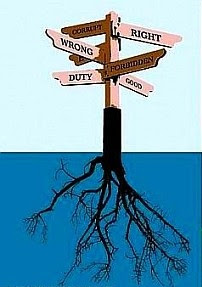
Of course, this is easier said than done.  It can be difficult at times to separate out what you think you want from what others have told you that you should want. To separate out our often subconscious worries about what our parents would say or what our ex-boyfriend might think of us, I think the following exercise, proposed by Tal Ben Shahar, can be very useful.

Consider:  What would you do if you had complete anonymity? In other words, if no one else would know your actions and their consequences, what would you choose to do? It may be hard to imagine, since we live in a world where it’s so easy to be constantly publicizing our actions, and there’s so much pressure to do that. But what if you were somehow invisible to the world, there were no Facebook or Twitter or LinkedIn, no parties to boast at or family visits or reunions where you had to account for yourself?  What if only you knew how you were spending your time? Now what would you do?

Give yourself time to sit with that and see where it takes you. If you’re like one of the many people struggling with this question, it could help clear the messy mental landscape a bit. Kind of like pulling weeds.

The Happy Lawyer?

10.05_77_BoyceMS_Law_feature

The other night I attended a training session at the New York City Bar Association called “Happiness for Lawyers: Mindfulness and Emotional Skills to Improve Our Professional Life (and Make us Happier).” As I was leaving, the security guard remarked that all the participants walking out of the room had a smile on their face. “That’s not the way they looked when they got here,” he said. “I guess it works.”

I hadn’t thought about it before, but it’s rare that I leave a meeting of lawyers smiling. I guess it’s pretty rare for others, too, since this security guard works at the City Bar Building, which houses events for lawyers all day.

There’s something about gathering a roomful of people, whether lawyers or anyone else, for the purpose of observing and settling your minds that has a naturally calming effect. Instead of focusing on some external problem to be battled or solved, which is what lawyers normally do, we were focused on just being aware of the anxiety caused by always having to solve people’s problems.

Lawyers are famously depressed and anxious, compared to people in other professions. Robert Chender, a longtime mindfulness teacher and lawyer who led the bar association training, explained why: our role as lawyers is mostly to worry. It’s to anticipate the worst that can happen and try to prevent it. While that may sometimes work to the benefit of our clients, it tends to spill over into our lives and make us chronically stressed out. Not only is it stressful to always focus on the worst that can happen; you come to believe that bad things predominate – in other words, you become a pessimist. (Or you already were a pessimist, and that’s why you were attracted to being a lawyer.) Ultimately, it’s a stressful and depressing way to live.

On top of that, lawyers have a tendency toward perfectionism. We might like to call that “detail-oriented,” and it can be useful if you’re writing a brief or researching a legal argument. But if you insist on everything being perfect in every aspect of your life, and that those around you have to be perfect as well, that’s a recipe for misery. Nobody’s perfect. You’ll always be disappointed.

We’re not doomed to depression or anxiety, though. By becoming aware of how our minds work and the thoughts that lead us astray, we can develop the capacity to have a choice: in a particular situation, do we want to assume the worst, or demand perfection, or not?

Context matters. If you’re drafting a contract you might well want to at least consider the worst, and protect against it, and triple-check the details. But if you’re home with your family or out with friends, worrying the worst will happen or demanding a perfect experience can put a real damper on your (and others’) ability for enjoyment. The key is to be aware when you’re mind is automatically taking you there.

The antidote to all this, of course, is mindfulness training. Mindfulness gives us the ability to see our thoughts and consider whether they reflect something real or imagined, and whether an impulse that follows them is one we want to act on or not. Mindfulness training usually includes some form of sitting meditation, as well as other simple practices you can use throughout the day. One is just to stop yourself when you feel a strong emotion and an impulse to act on it. Before acting, pause, take a deep breath, and let yourself feel the emotion as a physical sensation. Drop the story you’re telling yourself about it. Just experience the sensation. Now, you’ve calmed the stress centers in your brain enough to more carefully consider how you want to respond.

In fact, researchers have found that regularly practicing mindfulness can create physical changes in the brain, increasing gray matter in parts of the brain responsible for memory, sense of self, empathy, and stress.

There’s a growing movement of mindfulness for lawyers — one I wish had existed back when I was first entering the legal profession. It’s more than self-help, though:  mindfulness not only makes lawyers happier; it helps our clients and colleagues as well.


It’s Not a Package Deal

images-1One of the problems with being a cynic is that, when you’re trying to learn something new, it’s easy to focus on all the things that sound wrong or silly or otherwise questionable and to disregard the entire lesson or experience as a result.

I was sitting in a meditation class recently, for example, when the teacher said something about past or future lives. I don’t even remember what he was talking about -– probably something about karma and our minds -– but it didn’t really matter. My internal alarm bells went off immediately. I thought: “That’s ridiculous. I’m not coming back here.”

The thing is, I know and like this teacher, and I know he’s very good at explaining meditation, its practice and purpose, in an accessible, down-to-earth and engaging way. And I know, from personal experience, plus all the scientific studies backing it up, that meditation can be very helpful. I hadn’t been to that particular meditation center for a while, and I was enjoying being back and laughing along with his painfully accurate descriptions of how absurdly our minds work sometimes, and how they often cause us distress. Until he said the thing about multiple lives. At that point, my internal critic leapt to attention and immediately dismissed the value of whatever it was he was trying to say. I didn’t hear it. And chances are, it was something interesting.

Aware that he was talking to a group of mostly secular Brooklynites like me, the teacher quickly interrupted himself to let people know they didn’t have to believe in past and future lives to learn to meditate or reap its benefits. But I was aware of how easily and quickly my mind was ready to dismiss him and the whole meditation project, simply because the teacher — who was, after all, teaching at a Buddhist meditation center with a big golden Buddha statue behind him — had briefly mentioned something that is a basic tenet of Buddhism.

I’ve written before about how our minds have evolved to focus on the negative aspects of our experience, largely in order to protect us from mortal dangers. The part of the brain that reacts to fear, centered in the amygdala, also steps up when something isn’t physically threatening, but just doesn’t sound quite right. But it’s important to learn to step back a bit, and let the more developed, discerning part of my brain –- centered in the prefrontal cortex -– play its part, too.

I may not believe I’ll have multiple lives to live, although sometimes I wish I did. But I’m capable of distinguishing that piece of the teaching from the larger point, which is that our minds are influenced by all sorts of things –- including past experiences — that we’re often not aware of. Whether it’s something I did in my past life or something my mother said to me in grade school doesn’t really matter. The point is it may or may not be helpful to me, or to anyone else, today. The purpose of meditation is to develop more awareness of what’s going through my mind so I can choose how I want to respond rather than letting unconscious habits choose for me. And one of my habits is letting a cynical mind quash any new ideas that come packaged in or accompanied by something that makes me squirm.

As my positive psychology instructor, Tal Ben Shahar, pointed out in a recent class: “this is not a package deal.” I was in the middle of a week-long immersion for my Positive Psychology certification course, and struggling with some of what at the time seemed like really dumb, pointless exercises. More than once sitting in that lecture hall, I wanted to flee. But it helped me to hear Tal acknowledge that that’s okay. “You’ll hear things here that don’t make sense to you or just sound silly or unconvincing. If you don’t like them, forget about them. Pay attention to what resonates with you, and use it. Leave behind the rest. This is not a package deal.”

It was an important reminder for a skeptic like me. I too easily dismiss things as irrelevant or meaningless because some piece of it doesn’t jibe with me. This aversive reaction may feel immediately comforting, because now I don’t have to bother engaging with new material and can stay safely ensconced in my own cocoon of imagined superiority. But it’s ultimately extremely limiting, and really kind of silly. It’s a bit like dismissing Freud as irrelevant to psychology because I don’t believe in penis envy. But he did develop our modern understanding of the unconscious, which underpins much of our understanding of the human psyche today. So maybe there’s some value in his work after all.

Our culture of cynicism and irony is so focused on mocking and disparaging what we think is wrong that we tend to overlook or outright dismiss ideas that may be really valuable. The criticism might make us sound really clever — especially if we can express it as a witty 140-character commentary on Twitter. But in the process, we may find ourselves flushing a lot of really helpful wisdom down the drain.

Don’t Tell Me What To Do

Since starting my training in Positive Psychology, I’ve been bombarded with all sorts of helpful suggestions about what I ought to do to make myself happier. “Make a daily list of five things you’re grateful for,” or “meditate every day,” or “exercise regularly,” or “clean your closets.” All good ideas, and I’m sure if I did them all I’d be a happier person. But as soon as someone else tells me what to do, I find myself resisting it. I know I’m not alone in this, because I’ve noticed that when I try to tell other people what to do to be happier, they don’t follow my instructions, either.

I guess I’ve always been suspicious of adopting other people’s rituals, which remind me of religion, which reminds me of manipulation. And I’m equally suspicious of the self-help gurus and celebrities that promise a quick fix of all my problems if I’ll just follow their five steps. It all feels fake and simplistic to me.

Still, as I’ve delved deeper into the scientific studies of how people actually make lasting change, I’ve become convinced by the experts’ view that the best way to change old habits or create new ones is by establishing new rituals. According to psychologists and neuroscientists, by practicing something new over and over, we create new neuropathways that eventually turn that new behavior into a pattern — a new habit. At that point, it takes much less energy (what we often refer to as “willpower”) to keep doing it.

It turns out human beings have very limited amounts of willpower. It’s why most people give up pretty quickly on New Year’s resolutions and other promises to change. The psychologist Roy Baumeister has studied this extensively, and found that creating new habits is far more effective than attempting to muster enough willpower each day to do something new. (His findings are explained in an excellent book he co-authored with journalist John Tierney called Willpower: Rediscovering the Greatest Human Strength.)

So while I’ve resisted adopting other people’s rituals, I realized recently during a week-long Positive Psychology training immersion that to get the benefits, I don’t have to follow someone else’s practice; I can create my own. In fact, I’m much more likely to adopt a new habit if it’s something I came up with that suits my schedule and temperament than something someone else devised to suit theirs. In other words, I don’t have to clean my closets or make daily gratitude lists or write in a journal if I don’t want to. But if there’s something I do want to change – whether it’s developing certain qualities or dropping bad habits – I’m far more likely to be successful if I establish a daily practice that moves me in that direction. And I can use the wealth of evidence about the effectiveness of rituals to create a ritual that feels not like I’m fulfilling some external obligation imposed upon me, but one that I’ve chosen and created to help me pursue my own goals.

It may sound exhausting to have to do something new every day. (Another reason I’ve generally resisted it.) But making one decision in advance to do something and making it part of your daily routine drastically reduces the amount of mental energy involved. It would take far more willpower to re-convince yourself of the value of a new practice and to have to re-commit yourself each day to doing it.

And the truth is, we’re always practicing something. If we’re not consciously deciding what it is we want to practice, then we’re usually letting old habits decide for us. And often those aren’t taking us where we want to go.

Willpower, then, is not something that requires heroic strength. It’s simply a choice to use our awareness to make conscious choices. Creating a new ritual doesn’t have to demand Herculean effort. As Anthony Trollope, the prolific writer who never wrote more than three hours a day said: “A small daily task, if it be really daily, will beat the labours of a spasmodic Hercules.” A new ritual can take all of five minutes to complete, depending on what it is and how you want to implement it. But it can make a big difference.

Don’t try to change too much at once, though. People who try to take on too many new behaviors at once often end up abandoning them all. Studies show that people who implement small changes, one or two at a time, are more likely to sustain them. Committing to them in the presence of someone else (such as a friend, spouse, coach, etc.), to whom you’ll feel accountable, also greatly improves your chances for success.

The biggest effort required is the decision to create and practice the new ritual itself. To overcome your inner skeptic’s resistance, make it your own.


A Hole in the World

images-4I came across Portia Nelson’s wonderful “Autobiography in Five Short Chapters” recently and wanted to share it here. It encapsulates perfectly the challenging and often painstaking process of changing our most entrenched and destructive patterns of mind.

 

“There’s a Hole in My Sidewalk”

Chapter 1

I walk down the street.
There is a deep hole in the sidewalk.
I fall in.
I am lost… I am helpless.
It isn’t my fault.
It takes forever to find a way out.

Chapter 2

I walk down the same street.
There is a deep hole in the sidewalk.
I pretend I don’t see it.
I fall in again.
I can’t believe I am in the same place.
But, it isn’t my fault.
It still takes me a long time to get out.

Chapter 3

I walk down the same street.
There is a deep hole in the sidewalk.
I see it is there.
I still fall in. It’s a habit.
My eyes are open.
I know where I am.
It is my fault. I get out immediately.

Chapter 4

I walk down the same street.
There is a deep hole in the sidewalk.
I walk around it.

Chapter 5

I walk down another street.

Since the terrorist attacks in Paris, I’ve also been thinking it applies equally to how we collectively, as a society and political order, approach our most vexing problems — only it’s not clear we ever get past the first couple of chapters.

“I would bring back waterboarding,” declared Republican presidential candidate Donald Trump on ABC News’ Sunday show, This Week with George Stephanopolous, talking about how he would respond to terrorism if he were president.  Surely Trump doesn’t think that’s the answer, given the wealth of evidence that torture undermines rather than promotes national security. But with so many fearful Americans eager to see leaders do something, anything, to ensure their safety, Trump probably figured it would grab more headlines and score him more votes.

Donald Trump is an extreme case, of course, but whether it’s global warming, income inequality or terrorism, there seems to be a general societal instinct to respond immediately to our most entrenched problems with a defensiveness that clouds our ability to see our role in the problem and how our reactions perpetuate it.

An individual wanting to change can make a commitment to approaching the situation with renewed awareness and, eventually, choose to walk down a different path. But how can we do that as a society, in a political system governed by leaders focused only on short-term gains?


The Neuroscience of Change: More Cause for Compassion

neuroscience
If you’ve ever wondered why it’s so hard to make lasting change, you may find comfort in knowing that one reason is human biology. Neurobiology, in particular. That’s not cause for despair: because with sustained effort and support, our brains are actually something we can change.

Ever since participating in a retreat on the neurobiology of yoga and Buddhism back in May, I’ve been fascinated by how our brains have developed over millennia to help us survive, but in many ways, particularly in the modern world, also cause us to suffer. And I’ve found it strangely soothing to know that we’re all in the same boat here: another reason to extend compassion to ourselves, as well as to others, even when we – or they – do things we really don’t like. It’s also a good reason to seek support for changes you want to make – whether from a coach, friend, teacher or mentor – because it’s really hard to make lasting change on your own.

The brain is a complicated organ, of course, and there’s lots to be learned about it. Interested readers may want to check out Rick Hanson’s excellent book, Buddha’s Brain: the Practical Neuroscience of Happiness, Love and Wisdom, which provides a great explanation and lots of brain-changing exercises. I’m also relying here on what I learned from Jim Hopper about this at his recent Kripalu retreat, and in his chapter in the book Mindfulness-Oriented Interventions for Trauma: Integrating Contemplative Practices (The Guilford Press).

The Cliffs Notes version of this material goes something like this: we’re hard-wired to flee from danger and pain and to seek pleasure and safety. So when the part of the human brain called the amygdala — often called the “reptilian brain,” because it’s the oldest part of the human brain, in an evolutionary sense — senses a threat, it creates a response of fear or aversion – what we commonly call a “fight or flight” response. Whereas in the wild “fight” might have meant trying to kill a predator or competitor, in modern life, we “fight” often by getting angry or judgmental – a way of trying to regain control. The flight response, meanwhile, kicks in our seeking circuitry: now we’re seeking an escape from the fear or other unpleasant feeling. That may lead us to suppress the feeling, or to mask it by indulging in some immediately pleasurable activity to escape it – for example, eating, drinking, or sex.

Although we tend to lament these “bad habits,” these instincts were actually useful when we lived in the wild as hunter gatherers, where we had to escape predators and be on the constant prowl for food (and sex) for the species to survive. But these now-ingrained habits unfortunately don’t work so well in modern life, where we’re largely cushioned from life-threatening predators, and food and other basic pleasures are, for many of us, often too easily obtainable. That leads to indulgence, feelings of guilt or other kinds of pain, and more suffering.

On top of that, again with the aim of species survival, we’re hard-wired to pay far more attention to things that frighten us or cause us pain than to things that feel good. This is the brain’s “negativity bias.” As Hanson explains in his book, that helped us survive ages ago, when one encounter with a predator would mean the end of us, so we had to be hyper-alert to threats and lived in frequent fear. In comparison, there were multiple opportunities to find food and mates, so if we paid less attention to those simple pleasures when we encountered them and just sought them out when we really needed them, we could still survive just fine.

But you can see how this all becomes a recipe for suffering today. For one thing, it means we tend to exaggerate our fears. Since change usually involves some fear of the unknown, it means we have a built-in bias against change, even if that change would be good for us. We also have a tendency to overlook or underestimate the opportunities for lasting, more meaningful pleasures – things like love, peace, playfulness and joy (what Hopper calls “true goods”) — because we’re distracted by fear. Plus, because we’re raised among similarly hard-wired humans, we’ve incorporated the fears of everyone around us, too, who likewise have an exaggerated sense of fear when it comes to change, and a tendency to underestimate deeper satisfaction. (Not surprisingly, marketers have learned to take full advantage of this — hence the relentless advertising of junk food, luxury goods, pharmaceuticals and fabulous vacation “escapes”.)

The result of these ancient and culturally reinforced tendencies is that it often feels easier to stay stuck – to avoid the fear of making a change, and respond to current dissatisfaction by seeking short-term easily-available immediate pleasures (which often lead to more suffering), rather than seeking longer-lasting deeper satisfaction, which may involve more effort and taking risks.

This all sounds pretty depressing. But take heart: neuroscientists have found we can actually alter how this circuitry functions. It just takes awareness, practice, and support.

That means paying attention to how our brain functions on autopilot (and how it affects the body) and trying to create more space between the thoughts and the impulsive (and often destructive) behavior that tends to follow them. It means practicing different ways of thinking, through contemplative practices like meditation, which can actually strengthen the prefrontal cortex – the part of our brain that allows us to reason and regulate fear and other responses — or visioning exercises that can help counteract the paralyzing impact of fear by motivating a desired change. (Hanson includes in his book a series of guided meditations designed to enhance certain parts of the brain, such as those responsible for positive emotions like love and empathy, and for skills like mindfulness and concentration.) And it means finding support from like-minded people who can help keep us on track – a trusted friend; a local meditation, yoga or support group; a skilled coach; or ideally, some combination of these.

Changing your brain — and changing your life — is possible.  But it’s very hard to do alone.

Finding Joy at Work

imagesI joined a meditation group in my neighborhood recently, and the other night the teacher’s talk was about Joy.

Joy. It’s not something many of us tend to think about much. We focus on getting work done, on what’s annoying us, on the onslaught of problems we need to solve or that we’re hearing about in the world, but joy is something that many of us – maybe especially New Yorkers – tend to overlook.

When do you experience joy?

Of course, there’s joy to be experienced in everyday life: in the enthusiastic face-lickings I get from my dog when I arrive home, in the savoring of a good meal or a good conversation or the company of good friends. But one thing I realized listening to this talk, which came after a particularly intense day at the office, was that I rarely experience joy at work.

As I reflected on my work (I’m talking about my office job, not my coaching work), I realized that so much of it is spent focusing on awful things going on in the world that it’s hard to even think of joy in that context. I imagine that’s true for lots of people working as advocates, whose job it is to focus on some problem in the world and try to fix it. But that itself creates a problem.

Joy is essential. It’s what motivates us, and allows us to appreciate our lives and the world around us. Without joy, can we really bring our full selves to anything we do, and can we really do a good job? I don’t think so. But most importantly, without joy, work will leave us feeling pretty miserable.

How do you cultivate joy at work when your job involves things that are inherently a bummer? That may be some big social justice issue or a problem in your neighborhood or your company or with a product. Whatever it is, the potential for joy may not be apparent.

I’ve been thinking about this a lot lately. When I work with coaching clients, there may be parts that are difficult, but I find joy in the interaction itself, and in the feeling that I’m helping somebody, even if just by listening and helping them reflect on what’s on their mind and what might be getting in their way. When I work as a legal advocate, though, there isn’t that immediate connection with another person, or that satisfaction at the end of a session. Instead, it’s a long, endless slog toward improving a long-term situation that really sucks. You may never see the outcome, and anyway, the outcome probably won’t be what you’re hoping for. Where’s the joy in that?

Still, I see a lot of value in people advocating collectively for justice or other kinds of social and political change. It’s important work that in the long run, can make a difference. But can it be joyful?

I’ve written before about the importance of making your work meaningful, setting your own goals and acknowledging your successes. But I’m talking here about the daily experience of a job, which is a little different. As an advocate, you may know you’re part of an important effort to, say, stop global warming, but that may not make lobbying a Republican Congress led by climate change-deniers to pass laws reducing carbon emissions any more joyful.

So I’ve decided to embark on an experiment. I’m going to dedicate myself to bringing joy into my work every day. It may be in making a point to have one really good conversation with a colleague in the office, or in writing an advocacy piece that I really put my heart into. It could just involve going out of my way to acknowledge the great work done by one of my colleagues – a kind of “sympathetic joy” as Buddhists would call it . (“Sympathetic joy” is taking pleasure in other people’s happiness or success.) If none of those are possibilities, maybe it’s just taking time out of the day to quietly savor a good lunch or cup of coffee or listen to some really good music. Whatever it is, it has to be something that I actually stop and notice as joyful in some way, whether the process itself or the outcome.

Consider trying this with me. Because no matter what our work may be, if we can’t find one thing a day in it to truly enjoy in it, then in the long run, we’re not going to be doing anyone very much good.

Skip the New Year’s Resolution

karma ethics.tree buddhist-network comNew Year’s resolutions seem to me like a recipe for disaster. Another commitment you make to yourself that you inevitably end up breaking. I’m going to exercise every day, or lose weight, or cut out alcohol, or always be nice to my family, or whatever. Then you slip up, and bam – you feel like shit again. The resolution goes out the window.

But I like the idea of living deliberately – in fact, I think it’s crucial to a happy and fulfilled and meaningful life. Being conscious of our actions and making deliberate choices seem like basic building-blocks for that. So how to reconcile?

To me, setting an “intention” rather than making a “resolution” seems a bit more promising. An intention is something you want, plan and hope to do, but when you slip, as you inevitably will, you just dust yourself off and get back on the path you’ve chosen. I know, they say the road to hell is paved with good intentions, but that seems to me more using the term “intention” as a cheap band-aid covering up a deep and massive delusion that you’re not dealing with. A true intention is something you set for yourself, because it’s something you truly and deeply want, and you use it as a compass to move forward. Sometimes you get lost and veer from the path, perhaps caught up by some shiny delusive object you encounter in the woods along the way. But the compass helps you eventually find your way back and steer your course again.

I think one key to living by “intention” without getting discouraged when we screw up is just acknowledging that we’re human, and change is difficult. I’ve been reading a terrific book by Stephen Cope, a yoga teacher and psychotherapist who writes about the intersection of Western psychology and the Eastern philosophy of yoga. (I also participated in a weekend workshop with him at the Kripalu Center for Yoga and Health in the Berkshires after Christmas.) In The Wisdom of Yoga: A Seeker’s Guide to Extraordinary Living, Cope explains this phenomenon as being part of what yogis call karma.

This isn’t the sort of oversimplified notion of karma we tend to hear about as determining your life because of something you did in your prior life as a dog or the idea that people are suffering through a vicious war or in some horrible refugee camp as just desert for something bad they did in their past lives. This is a much more subtle and, to me, convincing notion of karma that’s also backed up by Western psychology and contemporary neuroscience. It’s simply the idea that our actions and reactions to circumstances create patterns in our minds, and the longer those patterns continue, the more deeply they become embedded in our unconscious and the harder they are to change.

A child might react to abuse by withdrawing, for example, and withdrawal from other people at the first sight of conflict might become her unconscious pattern. For someone else addiction results – alcohol, drugs, food, whatever. We all do things to avoid pain, and those things become part of the patterns that shape our lives. So when as adults on New Year’s Eve we decide we’re all of a sudden going to stop doing that thing, good luck – karma or brain patterning or whatever you want to call it is going to make it very difficult.

The yogic approach to changing this, according to Cope – which is very much like the Buddhist approach, which grew out of yoga philosophy – is simply to begin to focus our attention on the chain of events that leads to the unwanted action. Without judging or condemning it, simply notice when the craving or withdrawing or whatever problematic action arises. What is happening at that moment? What is the underlying feeling you’re fleeing?

Continue to watch it. What happens next? Do you reach for a drink, a cookie, or walk out the door? Do you get angry and yell at someone, or pick up your phone and get absorbed in your Twitter or Facebook feed? Whatever it is, just start by observing it. We tend to be so judgmental of ourselves that we refuse even to witness this chain of events, because it causes us so much shame. But as Cope explains, “[w]hen we pare away judgment, something remarkable happens. We’re free, for the first time, to observe how the pattern really works.”

So the key is to approach this all with compassion. Recognize it’s not “you” that’s doing this, in the sense of some fixed sense of yourself as a bad person. It’s just a part of your patterning, and we all have patterns that make us suffer. Only by letting go of the judgment and being willing to look at those patterns can we truly see them, and then take steps to interrupt them.

I’m not saying this is easy. Last night I was feeling sick, and tired, recovering from some sort of a bug I’d caught after not getting enough sleep on New Year’s eve, which I was still angry at myself about.   When I feel shitty, my impulse is usually toward sugar. Preferably chocolate. While I usually try not to keep that stuff around, lots of it ended up in our house over the holidays, and it was calling to me. Fortunately, I was reading Cope’s book, and after a couple of chocolate kisses I reminded myself to slow down and just feel what I was feeling. Tired. Pain in my stomach. Feelings of regret and disappointment at having let myself get to this state, after having set all sorts of intentions to live more deliberately and be healthier. I let those feelings wash over me, and reminded myself to be compassionate about it all. I felt the urge to run away from them slowly dissipate. The need for chocolate melted away. I realized that what I really needed was to sleep. I went to bed soon after.

Obviously some habits are more difficult than this one, but the process is basically the same. (For a highly simplified and overdramatized but compelling version of how exposing unconscious habits helps them unravel, watch Alfred Hitchcock’s movie Marnie, which I watched for the first time the other night.) Whether it’s Western psychology or yoga or Buddhism or any other contemplative tradition, the idea is the same: become aware of the internal chain of events that leads to the action you’re taking that you want to stop. Observe it without judgment.

Eventually, let yourself have the feelings that are arising, without reacting to them. Maybe at first you can ward off the reaction for just a few minutes. Over time, as you continue to make conscious and interrupt the chain of events, they have less power over you. The urge to act begins to dissipate. And you’re able to interrupt the chain earlier and earlier in the process.   The practices of yoga and meditation (and probably some Western practices of prayer as well) are designed to get us to slow down and focus enough that we can become aware of what’s happening internally, so we can make deliberate choices about how we want to act.

All of this helps explain why I don’t like the idea of New Year’s “resolutions.” A “resolution” is “a firm decision to do or not do something” and “the action of solving a problem,” and as we’ve seen, such deeply ingrained problems can rarely be “solved” simply by deciding to take any one action.

An “intention,” on the other hand, is “an aim or a plan,” or “a design.” It’s more like setting a path toward reaching an eventual destination. An intention allows you to be human – to stray from the path on occasion, as you’re inevitably lured by shiny objects that catch your eye along the way. But if it’s a true intention that’s important to you, and perhaps you create reminders for yourself of that, at least some outline or markings of the path remain. You’re still laying that path along the way, but the intention acts as a compass that aims you toward your ultimate goal.

I like that.

Tweaked Out On Twitter

social-media-addiction

After a couple of days of Twitter frenzy last week, I came down from my high and felt a bit sick – not unlike the aftermath of a sugar binge or a hangover. What had I just done with my time? And now where was all the virtual “love” I had been feeling? If I hadn’t tweeted – and been re-tweeted – in the last 24 hours, I wondered, did I even exist anymore?

This all happened just as I was winding down my last week of work before taking time off for the holidays. At first, I panicked. What would I do? Who would I be if I stopped checking my office e-mail, stopped Tweeting, and just started living my own life?

There’s been a lot written about internet and social media addiction, but usually it’s about how people use it to communicate with (or show off to) friends or share trivial details about their lives. But social media is also a venue for expression of political views, a tool for social justice advocacy campaigns, and way of disseminating hard news and other information we think of as “important.” But even that kind of use can become obsessive and ultimately deflating. Twenty-four hours of tweeting the details of the Senate Select Committee on Intelligence’s report on CIA torture last week, for example, didn’t leave me feeling like I’d accomplished a whole lot more than if I’d been posting cute pictures of my dog. Sure, I got a bunch of re-tweets while the torture story was hot in the news, but honestly, does that kind of 140-character engagement make any difference?

At the time, it seemed crucial – fueled by the possibility of retweets and “favorites” and ever more followers. But for what purpose? When I finally was too disgusted and exhausted by details of the torture report to continue my tweeting binge, all the attention I’d received – the internet “love” as they call it – stopped just as quickly. Not that I stopped obsessively checking, at least for a while. Because subconsciously there was this burning question: who am I – and what am I worth – if thousands of “followers” out there in the Twitterverse have no idea at this moment what I’m thinking?

Neuroscientists have tracked how the brain is affected by social media, and found that getting positive feedback – “likes” on Facebook, retweets or “favorites” on Twitter, for example, — appears to stimulate the same sort of reward centers we get from sex, food or receiving money. The more people use social media, the stronger that reaction. And therein lies the potential for addiction.

I got out of journalism five years ago in part for this very reason. I was writing for an online magazine that demanded not only in-depth articles but constant blogging and tweeting. The more clicks you could show for it, the better. The pace was so relentless, though, and the attention to the content so short-lived, that I felt like I was riding a roller-coaster. On a good day, I got lots of clicks and re-tweets and even got invited on the Rachel Maddow show — the highlight of my online journalism career. But on a bad day, no one seemed to care about the thing I was furiously reporting and writing about – and I undoubtedly thought was terribly important. I would end up frustrated, spent and demoralized. As with any roller-coaster, I came to realize, there was no final destination, just this endless ride of highs and lows, leading, it seemed, absolutely nowhere.

So I got out, determined to do something more meaningful. Although at times I’ve had the opportunity to do more sustained work on particular subjects of human rights advocacy, much of the work I do now feels eerily familiar: as advocates we basically repeat ourselves over and over, on social media, blogs and elsewhere, trying to spread our message as widely as possible, obsessing over the exact tone and wording of the message, and sometimes about who should best deliver it. But in this polarized political atmosphere where people’s opinions seem so entrenched, do we really change anyone’s mind? Does all that effort amount to anything?

I don’t mean to denigrate the advocates who do this work, many of whom I admire for their dedication to this Sisyphean task. And in the end, I believe it is important for all sorts of social justice advocates to be out there pushing their cause, even if immediate results are hard to see. There’s a strong argument to be made that over time, we see slow but real progress.

But my recent experience tweeting the torture report reminded me why it’s so important to also do things that involve more meaningful and sustained connections and relationships. It’s why I love coaching.

There’s a big difference in the kind of connections we make with people when we speak honestly, one-on-one, and truly listen. There’s a level of attention we can pay to one another when we really focus on doing that, that’s rare not only in social media, but in much of our daily lives. (How often are you talking to someone while they’re checking their e-mail, text or Twitter feed?) Coaching – or any real communication — is not about reaching the widest audience or winning the most accolades, but about really connecting with another human being. The value of that can’t be quantified.

Social scientists studying happiness have repeatedly shown that true personal connection is critical to our mental and physical health. Research shows people who have strong relationships with other people are happier, healthier and live longer.  These are the kinds of relationships in which people feel able to talk openly and be understood, give and receive support, share activities, experiences and positive emotions. And those are things that are found mostly in direct personal communication, not in an online public forum.

That doesn’t mean we should give up using social media. But we do need to be aware of when it becomes a substitute for real communication and connection – for spending time with, and talking to, actual living people.

I’m sure I’ll keep tweeting and writing about the things I want to change in the world (and post the occasional picture of my dog) with some small hope that I’m participating in a larger movement that will eventually do some good. I’m actually happy and proud to be a part of that larger effort. But I need to be careful to keep it in perspective, too. The roller coaster may be fun for a short ride, but what goes up will always come back down again. And always grasping for the next quick high is no way to live a meaningful life.

Why Can’t Cops Communicate?

Police arrest protester in midtown NYC after grand jury decision not to indict over death of Eric Garner. (AP photo)

The video of Eric Garner being choked to death by a group of police officers on Staten Island is horrifying for lots of reasons. But one I haven’t heard talked about much is the fact that the police who confronted Garner didn’t seem to know how to communicate with him at all. Their approach seemed to be: follow orders, or we’ll call in our army and wrestle you to the ground.

Leaving aside for a moment the absurdity that this pile-on was only for the alleged infraction of selling loose cigarettes, another fundamental question is, why aren’t police officers trained to listen to, hear, and speak to people they encounter on the street more effectively? Surely Garner wasn’t the only one these cops have met who insisted he wasn’t doing anything wrong and didn’t want to be arrested. Before they jump the guy, do they make any real, meaningful effort to listen to, understand, reason and communicate with him? If so, we certainly didn’t see it on this video.

It’s not unlike the leadup to the tragic killing in Ferguson, Missouri of 18-year-old Michael Brown. As former Baltimore Police Commissioner Fred Bealefeld commented to the New York Times, the officer, Darren Wilson, never bothered to get out of his police cruiser when he confronted Brown, instead barking commands at him through the car window.

“The notion of riding through neighborhoods yelling, ‘Get up on the curb’ or ‘Get out of the street,’ is not where you want your officers to be,” Bealefeld says. “You want them out of their cars, engaging the public and explaining to people what it is you are trying to do. Drive-by policing is not good for any community.”

St. Louis County police Lt. Jerry Lohr seems to have understood this. As this story describes it, the white 41-year-old police commander came to realize, as the conflict escalated in Ferguson after the grand jury’s decision not to charge Wilson, that to de-escalate the conflict, he had to get to know some of the protesters, and face them one-on-one — not as part of an army of riot gear-clad aliens issuing commands. In other words, he had to treat them as human beings deserving of attention and respect.

According to the story, at least, Lohr never wore riot gear, and instead would wade into a gathering of protesters “to answer questions, resolve disputes or listen to a stream of insults.” As a result, protesters trusted him, and sought him out by name if they wanted to make a complaint about abusive tactics by the police department.

“Allowing people to talk on a one-on-one level does a lot as far as building bridges,” Lieutenant Lohr said. “They may not agree with what I’m doing, but now they at least know my name and my face. I’m human again. They realize that I’m a person. I’m not just a uniform.”

It’s something everyone in positions of power over others should consider. If you simply expect people to follow your rules, without any explanation, and never reveal yourself as a human being making an honest effort, you won’t get much understanding in response; more likely, you’ll get an angry rebellion that will undermine whatever you’re trying to accomplish. If you approach others as human beings deserving of attention, respect and understanding, and reveal yourself to be the same, you’re far more likely to create a healthy environment and find enduring solutions to your problems – be it on the street, in the workplace or anywhere else.