The Power of Positive Psychology

istock_000005349409xsmall-300x299I’m taking a certification course in “positive psychology,” and I’ve realized lately that I feel a little sheepish telling people about it. There’s something about the idea of studying something so unabashedly “positive” that sounds a little silly, fake, Pollyannaish.

It also sounds very corporate, like the kind of thing they’d teach in business school so owners can convince employees that they’re really happy toiling away at meaningless jobs while they’re actually being exploited to make the owner huge profits.

Of course that’s not what “positive psychology” is really about, although it has become popular in the business world. It’s actually a growing branch of the field of psychology taught at such eminent universities as the University of Pennsylvania and Harvard.  Still, I’m realizing that I’ve so bought into the popular culture of cynicism that it feels like it takes an act of courage to admit I’m interested in what makes people happy. After all, given what’s going on in the world these days, (and especially what we see in the news), what right does anyone have to be happy?

As a therapeutic tool, the term “positive psychology” doesn’t inspire much confidence, either: it sounds like learning to sweep all the painful stuff under the rug and to just look at the bright side, which doesn’t seem like a very honest or effective strategy.

That’s not how the lead course instructor, psychologist and Harvard lecturer Tal Ben-Shahar, describes it. In his talks and books – some of which I’ve read and think are very good and not at all simplistic – he describes positive psychology as a sort of antidote to the field of psychology’s traditional focus on the negative – the pathologies and illness that make people suffer. He wants to focus on what works: what makes people happy, successful, and fulfilled.

But isn’t that just looking at the other side of the same coin? I wondered initially. People who aren’t happy, successful or fulfilled tend to be depressed, anxious and neurotic, right? So what difference does it make if we ask them why they’re depressed and anxious, as opposed to what makes them happy?

From what I can tell so far, the difference appears to be the focus. Let’s say I’m depressed and anxious because I hate my job, for example. I can focus on why I hate my job – because my boss is an idiot, or the work seems meaningless, or the hours are too long – and those would all be legitimate reasons to be miserable and want to quit. After all, it’s normal and even healthy to want our work to be fulfilling and in balance with the rest of our lives.

But I think a positive psychologist would first ask a few key questions. What do I like about my job? When do I enjoy it, or find my work interesting or fulfilling? The idea wouldn’t be to ignore my negative feelings, but if I can find and focus on the positive ones, that may lead me to a broader understanding of what’s going on, and to a wider range of options. Once I’ve identified what I like, I can consider how I might be able to increase those parts of my work. In the process, I can consider how I might decrease the parts I don’t like. For example, if a toxic boss is the problem, maybe I can limit contact with her, do the things that I know will satisfy her and get her off my back, or explore whether it might be possible to report to someone else. Now I have more options than just quitting, which may or may not solve my problem, since I don’t know what my next boss or colleagues or workplace situation will be like.

One advantage of positive psychology seems to be that it puts us in a position of power rather than leaving us stuck, feeling helpless. (Interestingly, the man considered the founder of the modern “positive psychology” movement, former American Psychological Association president Martin Seligman, is the same psychologist who coined the phrase “learned helplessness,” in which an animal or human being has learned she has no control over a bad or painful situation and therefore stops trying to change it.)

Positive psychology also reveals how much power we have to affect other people in a positive way. Rather than criticizing or focusing on what’s wrong with others, we can be the voice of encouragement, the one who finds the jewel in those around us and helps them polish it.

I was driving as I was thinking about this, returning home after a particularly grueling period of work, for which I was feeling generally unappreciated.  I turned on public radio. Terri Gross, host of the show “Fresh Air,” was interviewing country singer-songwriter Iris DeMent about her new album.

DeMent, who writes and sings soulful, plaintive songs in an oddly appealing high-pitched twang, was describing growing up as the youngest of 14 children in a religious Pentecostal Christian family. While music and singing were a big part of her upbringing, mostly connected to the church, school wasn’t, and she dropped out of high school by the 10th grade.

At 23, she decided to go back. DeMent had always loved writing stories, she said, and though she had little confidence in her writing ability, she enrolled in an English class at Washburn University in Topeka, Kansas. What she remembers about it was her teacher who, instead of commenting on the misspellings and bad grammar that littered her papers, would praise her imagination and creativity.

“She was so kind to me and so – just little, simple teacher notes, you know?” DeMent told Gross, her voice trembling as she recounted it. “But her red pen, you know, she’d say these really kind things and – you know, you have an imagination. You got the – and it encouraged me. She didn’t criticize what I didn’t know how to do.”

DeMent “sunk herself into that class,” she said, and then took another. She soon wrote her first song. From then on, she knew that was what she had to do.

From her telling of it, that one teacher, who saw and focused on the best in her, made all the difference. And that, from what I can tell, is the power of positive psychology.

The Refreshing Practice of Repentance

images-1“We are not in bondage to even our most grievous mistakes,” says Louis Newman, a professor of religious studies at Carleton College in Minnesota.  I find that helpful to consider today, on Yom Kippur, the Jewish holiday of repentance.

For anyone observing the holiday or just interested generally in the subject of repentance — not as an immersion in guilt but as an opportunity for renewal — it’s worth listening to Krista Tippett’s interview with Louis Newman on her NPR show, On Being.

Newman, who wrote a book on repentance, approaches the idea as a practice that’s healing, rather than punishing. So long as we’re willing to look honestly at what we’ve done, make amends, and choose another path, we can be healed.

As Newman tells Tippett, our human tendency to run away from the bad things we’ve done, to hide them or pretend they never happened, actually keeps us in bondage to them. Repentance, on the other hand, “is about coming to terms with who we really are.” It’s about claiming and owning our own mistakes, with an understanding that deep down our essence is good. So by repenting and correcting our path, Newman says, we can “return to the original wholeness that we strayed from.”

What’s more, you don’t have to change everything altogether in order to acknowledge and correct a past wrong. Even small changes may be effective and allow you to set a new course, says Newman. “If you’re headed in one direction, and you turn only one or two degrees,” he explains, “over an extended period of time if you now walk in that direction” instead of in the one you were headed in before, you’ll end up in a completely different place.  In other words, we don’t have to make a radical move to make a meaningful change.  We need only acknowledge that we must pay attention to a particular habit or weakness or failing that’s caused harm, and act differently next time.

That’s how change begins.

Be Here Now

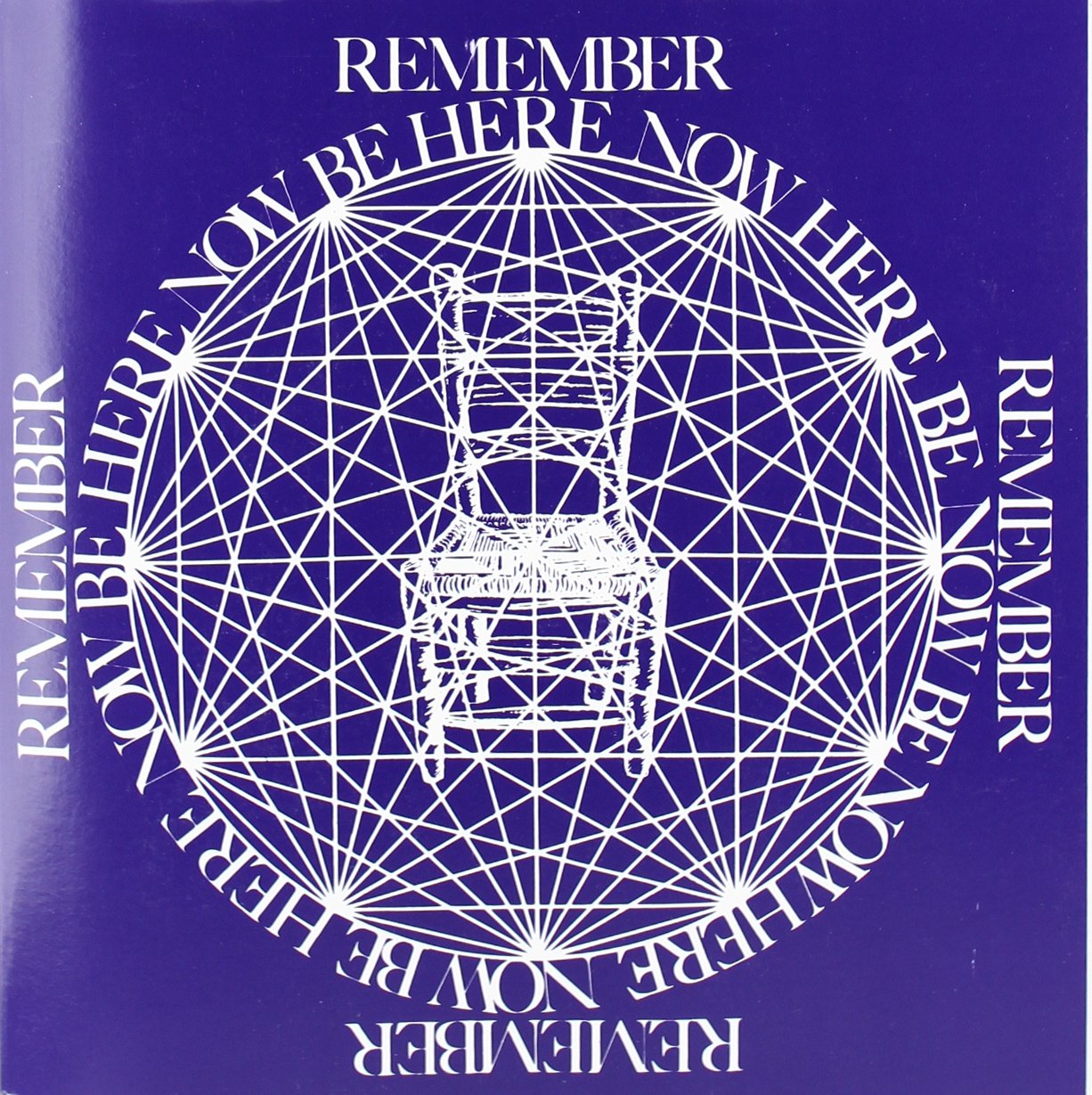
The cover of the book Be Here Now by Ram Dass

Whenever I start to do something, I have an annoying habit of wondering if I should be doing something else. Whether it’s reading, or writing, checking e-mail or doing household chores, or even relaxing on a Saturday afternoon, I often have this nagging feeling that there’s something else better or more important or more meaningful I should be doing. I’ve noticed the same thought pattern seems to plague some of my coaching clients, too.

We’re often told we should “make the most of every moment” or “live life to the fullest” because our lives are so short, but I find that also creates a lot of pressure:  How do we make the most of every moment? How do we know if we’re living our lives to the fullest? What does that even mean? I think that’s a lot of what’s behind that nagging feeling I often have that I should be doing something else.

The best answer I’ve heard to this dilemma was from a woman I know who was diagnosed with cancer seven years ago. After her diagnosis, she said, people would say to her: “well, carpé diem – enjoy your life now!”  It left her feeling confused and frustrated. What was she supposed to do, go skydiving?

“I’ve come to realize that what it means for me,” she said recently, “is just be present.” Be present for whatever you’re doing, whenever you’re doing it, whether it’s talking with a friend or drinking your morning cup of coffee. Really be there. Have the experience. If it’s a good one, you can savor it. If it’s an unpleasant one, stick around, because there’s probably something you can learn from it. Either way, show up for it – stop worrying about what else might be out there that you don’t know about; stop planning for the future or stewing about the past.

This is the essence of mindfulness. In his book, Choose the Life You Want: The Mindful Way to Happiness, psychologist Tal Ben-Shahar advises readers to read — and re-read — an essay written by Helen Keller that appeared in the January 1933 issue of The Atlantic.

Titled Three Days to See, the essay concludes:

I who am blind can give one hint to those who see — one admonition to those who would make full use of the gift of sight: Use your eyes as if tomorrow you would be stricken blind. And the same method can be applied to the other senses. Hear the music of voices, the song of a bird, the mighty strains of an orchestra, as if you would be stricken deaf tomorrow. Touch each object you want to touch as if tomorrow your tactile sense would fail. Smell the perfume of flowers, taste with relish each morsel, as if tomorrow you could never smell and taste again. Make the most of every sense; glory in all the facets of pleasure and beauty which the world reveals to you through the several means of contact which Nature provides. But of all the senses, I am sure that sight must be the most delightful.

Since reading this, when I find myself restless or dissatisfied, I’ll occasionally close my eyes for a few moments, just to imagine what it would be like not to see.  When I open them, I have a renewed appreciation for what I find.

You Can’t Own It All

jetskier

When I go on vacation, I like to find a remote and quiet spot. In fact, much of the reason I go on vacation is to escape the sounds of sirens and jackhammers and car alarms and blaring music I confront on a daily basis in New York City.

Inevitably, though, when I get to my carefully chosen vacation destination, I’m at least a little bit disappointed. There are other people there, for one thing, and they’re usually doing things I don’t like.

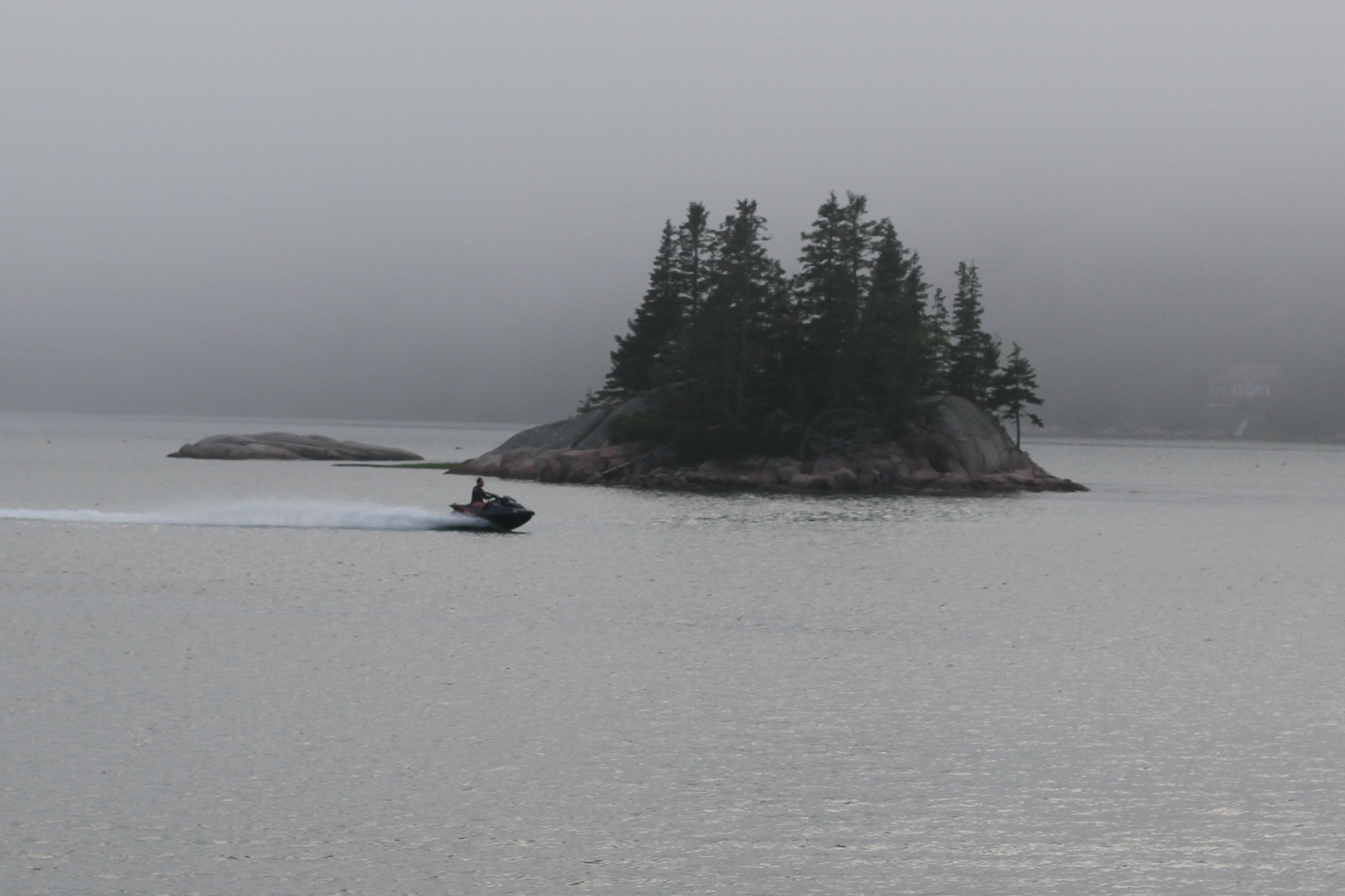
Yesterday, as I sat on the deck of the rustic cabin we’d rented for a week along the coast of Maine, for example, I was suddenly shocked out of my reverie by the roar of speeding engines:  a family on jet skis, screaming and whooping as they circled round and round the quiet cove we’d spent a chunk of our savings to spend a week on.

I could feel my stomach tie into knots, and all that compassion I’ve trained to muster fly right out the window.  I wanted to kill these people.  Literally.  It wasn’t just my peace and quiet they were destroying, I was thinking.  I imagined the local harbor seals rushing off in terror, the sea birds abandoning their nests, and the jet skis leaving behind a slick of oil that would sink behind them into the ocean water. They were not only destroying my peace of mind, but they were destroying the planet. I was outraged.

There’s a curious possessiveness that comes over me when I come to a place like this. On the one hand, I feel immediately relaxed just visiting here, being so close to nature. Yet almost immediately, I start to feel like I want to own it. I check Trulia for house prices and start fantasizing about how I’d fix up this run-down rental cottage if it were mine.  Something about liking the place makes me want to possess it, to control it, to keep it for myself.  And as with any sort of grasping, that desire makes me suffer. Even if I could afford a waterfront cabin in Maine, which I can’t, it wouldn’t be enough:  I couldn’t possibly own, and control, the entire wilderness.

The jet skiers brought that point home. It’s a similar sort of grasping, a desire to own and control, that leads to the sort of destruction and disruption of precious nature that I saw the jet-skiiers engaged in. Their aim, too, was to “own” the bay, but they weren’t just imagining what it would be like; they were seizing the whole harbor and turning it into their play area. That excluded anyone else who might be there seeking more quiet enjoyment.

This all reminds me of a memorable passage in philosopher Michel Serres’ book The Natural Contract:

I’ve often remarked that, just as certain animals piss on their territory so that it stays theirs, many men mark and dirty the things they own by shitting on them, in order to keep them, or shit on other things to make them their own. This stercoraceous or excremental origin of property rights seems to me a cultural source of what we call pollution, which, far from being an accidental result of involuntary acts, reveals deep intentions and a primary motivation.

Let’s have lunch together: when the salad bowl is passed, all one of us has to do is spit in it and it’s all his, since no one else will want any more of it. He will have polluted that domain and we will consider dirty that which, being clean only to him, he now owns. No one else ventures again into the places devastated by whoever occupies them in this way. Thus the sullied world reveals the mark of humanity, the mark of its dominators, the foul stamp of their hold and their appropriation.

A living species, ours, is succeeding in excluding all the others from its niche, which is now global: how could other species eat or live in that which we cover with filth? If the soiled world is in danger, it’s the result of our exclusive appropriation of things.

Ironically, one of the only ways to protect natural land these days, it seems, is to buy it – hence The Nature Conservancy was created to buy large tracts to protect the wilderness from “development” – that is, from people defecating on it.

Most of us can’t afford to buy hundreds of acres to preserve. And so we travel ever farther – in earth-destroying automobiles and airplanes – to find that peace and quiet and natural beauty we all viscerally long for, yet which human “development” – stemming in part from our desire to possess and control — has increasingly destroyed.

Inevitably, this grasping will lead not only to the destruction of our own peace of mind, as we arrive at our destination only to find ourselves surrounded by car traffic and jet skis, but to the destruction of the planet itself.

How can this possibly change? Given the short-term thinking that controls our culture, Serres points out, our political system has failed to address this. He believes we need politicians who are not just lawyers but also scientists and philosophers, which sounds like a good idea. We certainly need politicians who are sufficiently enlightened and independent to be able to promote and motivate others to support our collective long-term interests.

I reached a similar conclusion myself the other day, in a different context. I was speaking to a class of foreign law students about human rights advocacy, particularly in the face of the endless war our country seems to have embraced. I ended with the usual lament that with our current state of politics, with politicians serving their own short-term interests, which often turn out to be the interests of defense contractors, it’s hard to imagine significant change anytime soon. Certainly international human rights law wasn’t going to accomplish it. One of the students refused to accept that downer of an answer, and asked:  So what would change things?  I thought about it, and realized that the only thing I could imagine is a new kind of politician – a long-term thinker interested in more than his or her own re-election and willing to stand up to the powerful short-term interests that control much of our society.

Of course, there are small changes that happen in small ways, and I don’t mean to diminish those. But anyone who believes in anything faces the constant challenge of appreciating what you’re doing without getting too hung up on its limitations – and angry at the people creating them. That can be hard.

I’ve managed to enjoy my time in Maine despite the obnoxious jet-skiiers  (thank god they go in at low tide) and the sound of cars in the distance whizzing by on the local highway.  I’ve had to remind myself that I, too, share that tendency to grasp, possess and control things, so focusing on how other people have done the same (albeit in what I consider a more destructive manner) is a bit absurd.  I’ve also made a point of taking time out each day to meditate, to encourage a sense of inner peace and stillness, wherever I am and whatever’s going on around me. (I’ve found the meditation app Headspace really helpful for that, by the way, and recommend it for anyone who has trouble meditating on her own.)

I still think jet skis ought to be outlawed and all our use of motor vehicles more strictly regulated.  And I’ll do everything in my power to support those sorts of policies, whether advocating for more bike lanes back in the city or voting for whatever political candidate seems to truly share my concerns.

But I know – and will continually have to remind myself – that I can’t hinge my happiness on the outcome.

A Deceptively Simple Practice

rumiI’ve written before about my difficulties with a daily meditation practice, but since I’m increasingly convinced of the benefits of mindfulness meditation and other forms of mind training on health and overall well-being, I was particularly pleased to come across a short meditation recently that’s both easy and effective.

It’s also a great coaching tool.

I spent five days on a wonderful retreat at the Kripalu Center for Yoga and Health last month, learning about the neuroscience of Buddhism and yoga. Jim Hopper, a psychologist and neuroscientist who teaches at Harvard Medical School and co-led the retreat, introduced us to a simple but powerful practice.  It’s perfect for those of us who sometimes feel we’ve veered off track from what we really care about, and need some help re-focusing on what that is — or what it may have become over time — and how to incorporate more of it into our lives.

Adding a slight twist to a popular quote from the 13th century Persian poet, Rumi, Hopper turned it into the following meditation:  “May I be silently drawn by the stronger pull of what I really love.”

Simple.  Yet I found that when I sat and quieted my mind, then spent some time focusing on that one line, something happened.  What I really love came to mind:  people, places, passions.  And I felt sincerely motivated to make them a more central part of my life.

I’ve returned to this meditation repeatedly since then, and have just allowed it to have its effect.  It’s not pushing or forcing anything, just allowing whatever comes up.  And I’ve found it not only motivating, but strangely soothing.

Advocacy + Complexity of Mind = Patience

ME_113_PatienceOne of the hardest things about being an advocate is the slow pace of change. As advocates, we assume we know the answer to how to fix some vexing problem, and it’s just incredibly frustrating that the powers-that-be don’t seem to get it. We have to repeat ourselves interminably and try to come up with new, ever-more-creative ways of saying the same thing simply in order to feel like we’re being heard. It can be exasperating.

So I found it encouraging to read Robert Kegan and Lisa Lahey’s book called Immunity to Change: How to Overcome it and Unlock the Potential in Yourself and Your Organization. Although their book is most helpful for providing a simple and effective method for challenging our own built-in immunities to doing things differently – which I’ll write more about another time — before they even get there, the authors, experts in adult learning and development, first explain the importance of complex thinking, which involves the ability in all situations to see beyond your own point of view and keep in mind its limitations. And they note that very few people – including leaders of massive organizations — are really good at it.

It sounds obvious, in a way: of course we know we don’t know everything. But that’s not how we tend to operate in the world. Managers often fail to keep an open mind to others’ ideas, for example. I’ve written before about how a lack of mindfulness – which is very similar to what Kegan and Lahey call complexity of thought – leads to unhappy employees and bad outcomes for the organization.

There’s a similar lack of this sort of mindfulness in the world of advocacy, where we tend to over-simplify a problem. At times, of course, we need to simplify a problem to explain it to a broad, non-expert audience. But if we become too attached to that simplification, and fail to remember its own limitations, we’re likely to see little progress and become tremendously frustrated.

Say, for example, you’re advocating for reduced reliance on fossil fuels. It seems like a no-brainer, given the problems of global warming, pollution, and wars being fought over oil. But there are obviously complicating factors, such as the livelihoods of people dependent on the fossil fuel industry and communities or whole countries (or at least their governments) that benefit from oil and gas extraction. They’re obviously going to fight the effort. If you just assume they’re evil – as it’s easy to do, looking at the problem through your own perspective – then you’re going to find your work pretty frustrating. No matter how many times you’ve repeated yourself, or found new creative ways to say the same thing, nothing seems to change. Why bother?

But is it really true that nothing changes? And how does change actually happen?

This is where I think complexity of mind is interesting. It’s only by recognizing the complexity of the problem that we can understand where others that disagree with us are coming from. And it’s only by recognizing that we may not always have the complete picture that we can see where small changes and improvements might actually be possible, and may even already be happening.

This is not the exciting theory of change that drives people to become advocates. When I was in law school and read the great civil rights cases like Brown v. Board of Education and Roe v. Wade, I got the fantastical impression that you became a lawyer, made a winning argument to the Supreme Court, and that changed everything. But anyone who’s practiced law — and anyone who’s ever fought for racial justice or reproductive freedom — knows that’s definitely not the case.

That doesn’t necessarily make it less frustrating. Years of making arguments about why the Guantanamo Bay detention center should be closed (a key part of my legal job) doesn’t make it happen. But recognizing the importance of complexity of mind also helps me remember that it may not – indeed, it almost surely won’t – happen the way I, and others I agree with, insist it should. Progress is slow, and some bad moves made years ago can take a very long time to correct.  I don’t have to abandon my values or beliefs to recognize that. To satisfy my own needs, I may need to pursue other things that are more gratifying on a short-term basis, such as coaching. But like anyone advocating for legal and policy change, if I’m going to sustain my commitment to a larger cause, I’ll need to keep in mind its complexity. And I’ll need to train my own mind to better see and accept the many facets to the problem — and to the obstacles to real change.

I guess this is why patience is considered a virtue.

images

Mindful Management: A No-Brainer  

UnknownThere are all sorts of books out there telling people how to be better managers – do these 5 things (e.g., “expect excellence”), etc. But having both been a manager and been managed for many years in lots of different organizations, I think it really boils down to one key thing: being mindful.

In other words, pay attention – to the people and situations around you, and to your own words and actions. Are they serving you and others well? Not surprisingly, serving others reverberates; studies show that employees who are happy are also more productive.

So, for example, as a manager, when someone has done a good job or gone out of their way to help you, do you take the time to notice, acknowledge, and thank them? Do you take the time to review their work and offer feedback? Do you show interest in what they care about?

Or, when you’re feeling stressed or irritable, do you snap at the people who work for you, or suggest the problem you’re having is their fault? The instinct to blame is common, and perhaps natural, given that it’s painful to acknowledge our responsibility for a bad situation and difficult to accept that sometimes things just go awry. But if the blame is unwarranted, as it often is, it generates the kind of resentment that’s toxic to any workplace. I’ve seen this in clients, where managers can’t understand why they have such high employee turnover, yet don’t stop to think about what their own behavior is contributing. The result is often chronic problems caused by inexperienced and poorly trained employees, because no one sticks around long enough either to do the job or to show new people the ropes. Those who do stick around are often so scared that they’re competing with new employees rather than helping to train them.

Of course, treating people mindfully sounds like a no-brainer.  And studies have even shown that “the more mindful the leader, the lower the employee’s emotional exhaustion,” leading to “better overall job performance ratings of the employee,” according to the Greater Good Science Center at University of California, Berkeley. But I’m repeatedly amazed at how often such a simple practice is just not done. Although the concept of mindfulness has become popular in recent years, it doesn’t seem to have penetrated the rungs of upper management in many organizations. And to be fair, it’s not easy; it’s not what most of us were trained to do.  So, many managers, facing their own pressures, often disregard their impact on other people, or don’t even bother to consider that the people who work for them are other people. And it brings the whole organization down.

In a recent radio interview, the makers of the new documentary The Hand That Feeds, which follows an organizing effort by workers at an Upper East Side Manhattan store of the Hot and Crusty restaurant chain, said the real reason the workers formed a union and went on strike was largely because managers never said “please” and “thank you.” It wasn’t just the poor wages and conditions; it was that they felt disrespected.

While we don’t all run offices or restaurants or other organizations, to some degree, we’re all managers, at least of our own lives, and can be more mindful of our impact on others. Each day involves interaction with other people — from the person next to you on the train to the worker behind the take-out counter where you get your lunch to the receptionist who minds the company’s front desk. To that extent, we all have an opportunity to be more mindful – and to appreciate its impact.

It reminds me of a line in a poem by Jack Kerouac I came across the other day on the site Brainpickings: “Practice kindness all day to everybody and you will realize you are already in heaven now.”

If Dogs Run Free . . .

7aceb4bd3e15499190a8b4762050e1b8If there isn’t a name for it, there should be:  that feeling when you come back from vacation in a beautiful place and wonder why you don’t just live there.

I know, this is a privileged person’s problem. Still, travel often leads people to question their daily lives and purpose, and I was having a severe case of that as I packed to return to Brooklyn after 5 days in the Dominican Republic in early March.

Of course, I was very lucky to be able to go there at all, and to stumble upon the terrific Hotel Todo Blanco:  a picture-perfect colonial style building perched on a hill above the ocean.

Waking up there, I felt like a different person:  fully relaxed, in both body and mind. In New York, I face winter mornings in the fog of a sinus headache and have to drag myself to the gym just to attain a modicum of sanity. In the D.R., I felt great from the moment I woke up and felt the cool ocean breeze wafting through our open patio door.  Though I took long walks on the beach, swam in the ocean and hiked up to a terrific restaurant, El Cabito, perched on the edge of a cliff with a breathtaking view of the sunset, I never once “worked out” – there was nothing like work involved.

It helped, of course, that I never turned on my cell phone or checked my e-mail. Nor did I read or hear any news for the 5 days I was there. (Turns out it doesn’t really change that much when you’re gone.) So why, I wondered, as I reluctantly packed my suitcase, do I choose to live in the harsh climate and dirty, noisy, costly city of New York, and keep a job that requires me to follow the news obsessively? Is this really a good idea?

It’s not just the people in the D.R. who are relaxed: dogs roam freely, on the beaches, in town, even in restaurants. No leashes (or neutering) required. And I never saw even one act aggressively.  The D.R. seemed like heaven for all of us; I envied the European expats that live in the fishing village-turned-tourist town we stayed in. I even fantasized about buying the Hotel Todo Blanco and offering beach yoga and life coaching to my guests.

Then we got in the taxi to the airport.

As usual, upon arrival in New York, we had to go through customs. I always kind of like this ritual, because the customs officials always offer a warm “welcome home.” This time, though, the man asked me what I do for a living. I don’t know why that’s relevant – maybe it’s how they guess whether you’re sneaking things into the country. In any event, I said I’m a lawyer for a human rights organization. The customs official stamped my documents, looked me in the eye and responded: “Keep making a difference.”

I was surprised and a little flustered. “Thank you!” I said with a smile. As I headed for the taxi stand, though, I wondered: “making a difference? Do I really make any difference?” I’m not sure. In fact, I thought, if I owned a hotel in the D.R. and provided decent jobs and a living wage to people there, wouldn’t that be making more of a difference? Maybe I would even do volunteer work there, teaching English to children or something. Wouldn’t that help people more than I do now?

I don’t really know the answer to those questions. But what I do know, and I felt as I headed to my office the next morning, is that, like many of us who put up with the discomforts and stresses of big cities, I have an opportunity now to do work that’s useful. Now that I’m back home, it’s where I need to focus. Advocating for better human rights policies may not provide anyone a living, but as I’ve written before, I do think advocates, working together, ultimately do an important service – even if it’s only to keep things from getting worse.

Christof Heyns, the U.N. Special Rapporteur on Extrajudicial, Arbitrary or Summary Executions (a cheery title), made a similar point recently at a lecture at Columbia University law school that really struck me. He said that while the world seems pretty brutal today, it’s a whole lot better than before the Geneva Conventions, the cornerstone of international human rights law. In World Wars I and II, for example, the brutality of organized governments and their armies was unimaginable: some 60 million people were killed in the Second World War alone. Today, bombing the civilian centers of major cities would be unthinkable. Yes, there are brutal dictators who sometimes slaughter their own people, but it’s not on the same scale. Major world powers do not commit the level of atrocities seen in the past. New weapons have actually improved governments’ abilities to fight wars while killing fewer people. And the establishment of human rights laws and norms has made it impossible for those trends to reverse, even if we know that a superpower like the United States will never be held accountable for its own wrongdoings. The development of the law, pushed along slowly by its advocates, is gradual and often painfully slow, Heyns acknowledged, but it does shift norms and public understandings that eventually lead to lasting change.

Of course, today’s challenges are still huge. As Rebecca Solnit recently wrote in a powerful essay in Harper’s, nation-states are less vicious today in attacks the built environment, but we’re steadily destroying what’s left of the natural one. That’s perhaps the fight where tangible gains seem most elusive: defending the planet’s climate and air and water requires long-term commitment to concerted and coordinated action despite huge political hurdles; it’s undoubtedly incredibly frustrating to everyone involved.

So what does this have to do with why we don’t all just move to the D.R.? Maybe just that part of how many of us feel in any place will be directly connected to what we think we can contribute there.  Maybe one day I’ll find a way to make what feels like a real contribution while living along a tropical beach lined with palm trees and cooled by ocean breezes. But for now, I live in Brooklyn, which has a lot of very different things to offer. And I think there’s plenty for me to at least try to contribute right here.

A Question About Meditation

meditationI like to read about meditation – the shelf on my night-table is filled with books by Pema Chodron, Mark Epstein, and various other Buddhist-inspired meditation teachers, whose words and ideas I find soothing, especially before bed. But actually sitting on a cushion and meditating every day? Not so much.

I like meditating in groups, and I’ve enjoyed going to various meditation centers in New York City, which has plenty of them. But I can’t always get myself to a group sitting, and I’ve been especially reluctant this winter.

Meanwhile, I keep seeing new studies studies touting the benefits of meditation – to treat insomnia, reduce stress, improve creativity, even prevent brain shrinkage as we age. So lately I’ve been thinking I really ought to be more serious about doing it.

What I love about the books is learning about Buddhist philosophy and psychology, and its application to daily life. I’ve found the practice of mindfulness incredibly helpful, for example, in getting me to really pay attention to, and appreciate, what I’m doing at any time. I also think it’s invaluable for coaching – encouraging clients to slow down and experience the moment they’re in, or an event or emotion they’re struggling with, has immense benefits and can be really important to the ability to make lasting change.

But I’ve still found it hard to just sit for 20 or 30 or 40 minutes a day with my eyes closed, or staring at the floor, depending on the particular style of meditation involved. I sometimes meditate on the subway, which is always calming, and I’ll practice that kind of one-pointed concentration on the breath or on my movement when I’m running or at the gym or doing yoga, at least for short periods. I even use it to take a nap in the afternoon or fall asleep at night. It’s the sitting still part – and staying awake – that I have trouble with.

I imagine it’s because all my life, I’ve had the feeling that I’m supposed to be doing something – often, something other than what I’m doing. I remember in college, if it was a beautiful day outside and I was in the library studying, I’d feel like I should be doing something outdoors. If I was outside, say, hanging out with friends or going for a run, I would feel like I should be in the library studying.

Now, when I sit down to meditate, that struggle comes up constantly. I immediately think of all the other things I have to do. Within minutes I’ll find myself jumping up and making a to-do list.

I remember being on a weekend meditation retreat once at a retreat center in the picturesque Hudson Valley, and telling the meditation teacher in my interview that I was wondering the whole time why I was sitting on the floor inside all weekend, when I could be outside doing something. He just smiled his wise smile, and told me that was okay, I can just let myself feel that. That sort of helped.

I know it’s in part the way I was raised – in a very traditional, achievement-oriented Jewish immigrant family, where we were always expected to be doing something aimed at achieving some concrete, demonstrable result – studying or practicing the piano, for example. That attitude helped us get into good colleges and graduate schools and landed us professional degrees and accolades, but I think both my brother and I still have a hard time settling down – accepting and appreciating things as they are — just being, as the Buddhists would say. Which is a problem. Because we can’t, and we won’t, always be achieving something. And even if we are, we likely won’t be achieving it as much or as well as we want to, or we’ll be thinking we really ought to be achieving something else.

One of the cornerstones of Buddhism is that life is filled with a “pervasive feeling of unsatisfactoriness,” as the Buddhist psychoanalyst Mark Epstein describes it in his book, Going on Being: Buddhism and the Way of Change, about his own exploration of Buddhism and psychology. “We want what we can’t have and we don’t want what we do have; we want more of what we like and less of what we don’t like.” Seeing this clearly is part of the point of meditation – to illuminate how our minds work and cause us suffering. The idea is that if you see your mind doing this – and as in my retreat, it will start doing this pretty quickly when you sit to meditate – we’re able to recognize those as just thoughts, not necessarily “truths” – and create some space around them, lessening their grip. I understand and appreciate the theory, and it’s helped me become more aware of my thoughts (including the absurd and dysfunctional ones), which has been really helpful. But I still can’t get myself to sit down and meditate every day.

What are other people’s experiences with this? Do you need to have a formal practice of daily sitting meditation to truly incorporate mindfulness and its insights into your life? I’d really like to know.

How To Be Of Service

imagesI belong to a local food co-op, and for the privilege of buying really good food at reasonable prices, all members have to work there once a month. Although I usually whine about it before I actually head over there to do my evening shift, once I’m working, I often find it feels like the most useful thing I’ve done all day. Given that I have a “serious” day job as a lawyer for a human rights organization, that might sound odd. But honestly, stocking fresh apples or bunches of kale can feel a lot more real and productive than responding to e-mails, drafting press statements or monitoring Congressional or judicial hearings.

“As far as I’m concerned, every last one of them can rot in hell,” was Senator Tom Cotton’s memorable remark at the last Congressional hearing I watched, which focused on the fate of the remaining prisoners at Guantanamo Bay, half of whom are already cleared for release. Sadly, no amount of outrage I or anyone else expressed was going to change that he and many people in this country feel that way.

Maybe it’s the cold (or the new Republican Congress) that’s gotten me feeling defeatist about my advocacy work lately – it’s dipped below zero lately with the windchill factor here in Brooklyn – but I’ve been wondering a lot about what it means to be useful. I remember a yoga teacher once telling a class I was in that her purpose in life was “to be of service.” That’s stuck with me.

Of course, many people share that goal, and there’s lots of social science supporting the idea that helping others supports our own happiness. But that still leaves the huge challenge of figuring out how each of us can best do that. Where does our unique combination of talents, skills, interests and circumstances lead? Where and how can each of us be most useful?

The answers are different for everyone, and may keep changing over the course of our lives, but here are five things to consider as guidelines.

  1. Helping shouldn’t make you miserable.

This may sound like a no-brainer, but it’s easy to go down a path you thought would provide a real service that you then find you can’t stand. When I started out as a lawyer, for example, I was thrilled to get a job with a child welfare advocacy organization. We brought huge class-action cases representing hundreds of thousands of kids at risk of abuse and neglect around the country. What could be more noble? In reality, I spent most of my time in an office sifting through documents and regurgitating the same legal arguments over and over. I was miserable. It took me time, though, to realize that it’s okay to leave a “good” job that does “good” work if it makes you feel lousy.

  1. Your calling doesn’t land you in the poorhouse.

Some people can afford to do low-paying work that provides a service; others can’t. Taking a job that doesn’t pay you enough to support yourself and your family, if you need to do that, isn’t going to help anyone in the long run. Do work that not only provides a service to others but will sustain you as well.

  1. Your work allows you to take care of yourself.

In addition to providing others a service and you an income, your work needs to allow you the time and flexibility to take care of yourself. I see some people work so hard that between their job and their family responsibilities they end up neglecting their own physical and mental health. When you neglect yourself, you end up neglecting those around you. You can’t offer the best of yourself if you haven’t nurtured yourself in the process. In the long run, this is critical to providing a true service to anyone.

  1. You encounter a sense of flow, effortlessness or timelessness in your work.

The state of “flow” is achieved when “a person’s body or mind is stretched to its limits in a voluntary effort to accomplish something difficult and worthwhile,” says Mihaly Csikszentmihalyi, who coined the term in his 1990 book, Flow: The Psychology of Optimal Experience. The point is that you’re so engaged in what you’re doing that you’ve stopped thinking about yourself, and stopped worrying about the past or the future. You’re just in the moment, doing what you’re doing. It doesn’t feel like “work” anymore, it’s just being. These are precious moments. I get them sometimes when I’m writing, or really connecting with a coaching client. Providing a service to others should provide you at least some moments when you’re totally engaged in that way – whether with another person, an action or a creation. Without that, it will be hard to sustain your commitment.

  1. You feel good about yourself at the end of the day.

This is key. A job may sound important when you describe it at a cocktail party, but when you look back at what you’ve done after a day’s work, how do you feel? Do you feel like you accomplished something, helped someone, participated in an important effort, or otherwise added something to the world around you? Or do you feel like you’ve just wasted your time? Pay attention to that. Providing a real service should feel like you’re providing a service. It may not (and probably won’t be) fun or fulfilling every minute, but after you’ve spent a chunk of time on it, you should feel like you’ve done and contributed something of value. If you don’t, think about that – and consider when you do.

Of course, this is not an exhaustive list, just a few things to pay attention to. And it doesn’t mean you have to immediately quit your job if your work doesn’t meet these standards. But it does suggest you may want to ask yourself what’s really important to you, and how does your life now support those things? How can it better support them?

And if you have any other guidelines you’d like to add to this list, please do! That’s what comments are for.