You Can’t Own It All

jetskier

When I go on vacation, I like to find a remote and quiet spot. In fact, much of the reason I go on vacation is to escape the sounds of sirens and jackhammers and car alarms and blaring music I confront on a daily basis in New York City.

Inevitably, though, when I get to my carefully chosen vacation destination, I’m at least a little bit disappointed. There are other people there, for one thing, and they’re usually doing things I don’t like.

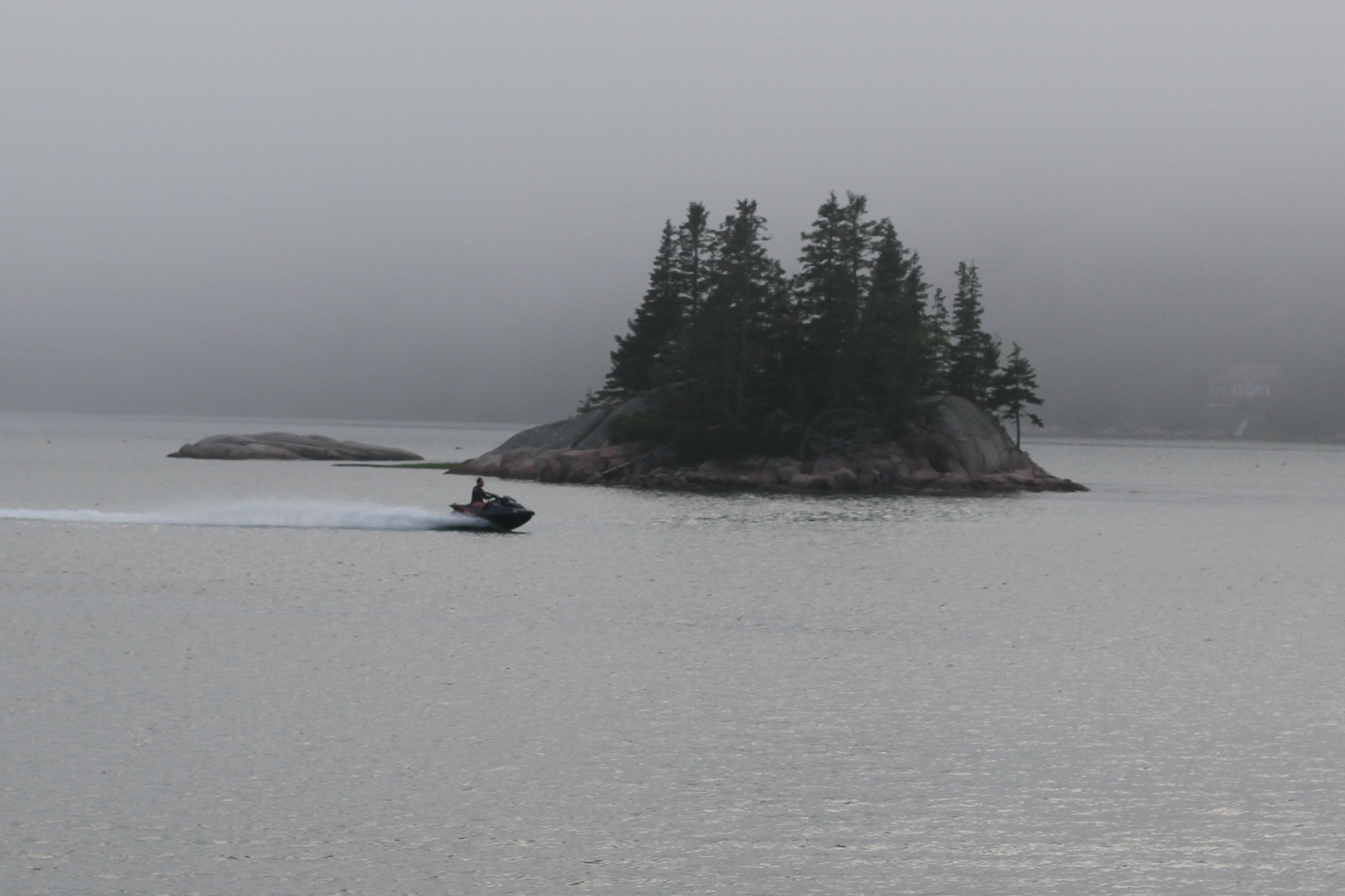
Yesterday, as I sat on the deck of the rustic cabin we’d rented for a week along the coast of Maine, for example, I was suddenly shocked out of my reverie by the roar of speeding engines:  a family on jet skis, screaming and whooping as they circled round and round the quiet cove we’d spent a chunk of our savings to spend a week on.

I could feel my stomach tie into knots, and all that compassion I’ve trained to muster fly right out the window.  I wanted to kill these people.  Literally.  It wasn’t just my peace and quiet they were destroying, I was thinking.  I imagined the local harbor seals rushing off in terror, the sea birds abandoning their nests, and the jet skis leaving behind a slick of oil that would sink behind them into the ocean water. They were not only destroying my peace of mind, but they were destroying the planet. I was outraged.

There’s a curious possessiveness that comes over me when I come to a place like this. On the one hand, I feel immediately relaxed just visiting here, being so close to nature. Yet almost immediately, I start to feel like I want to own it. I check Trulia for house prices and start fantasizing about how I’d fix up this run-down rental cottage if it were mine.  Something about liking the place makes me want to possess it, to control it, to keep it for myself.  And as with any sort of grasping, that desire makes me suffer. Even if I could afford a waterfront cabin in Maine, which I can’t, it wouldn’t be enough:  I couldn’t possibly own, and control, the entire wilderness.

The jet skiers brought that point home. It’s a similar sort of grasping, a desire to own and control, that leads to the sort of destruction and disruption of precious nature that I saw the jet-skiiers engaged in. Their aim, too, was to “own” the bay, but they weren’t just imagining what it would be like; they were seizing the whole harbor and turning it into their play area. That excluded anyone else who might be there seeking more quiet enjoyment.

This all reminds me of a memorable passage in philosopher Michel Serres’ book The Natural Contract:

I’ve often remarked that, just as certain animals piss on their territory so that it stays theirs, many men mark and dirty the things they own by shitting on them, in order to keep them, or shit on other things to make them their own. This stercoraceous or excremental origin of property rights seems to me a cultural source of what we call pollution, which, far from being an accidental result of involuntary acts, reveals deep intentions and a primary motivation.

Let’s have lunch together: when the salad bowl is passed, all one of us has to do is spit in it and it’s all his, since no one else will want any more of it. He will have polluted that domain and we will consider dirty that which, being clean only to him, he now owns. No one else ventures again into the places devastated by whoever occupies them in this way. Thus the sullied world reveals the mark of humanity, the mark of its dominators, the foul stamp of their hold and their appropriation.

A living species, ours, is succeeding in excluding all the others from its niche, which is now global: how could other species eat or live in that which we cover with filth? If the soiled world is in danger, it’s the result of our exclusive appropriation of things.

Ironically, one of the only ways to protect natural land these days, it seems, is to buy it – hence The Nature Conservancy was created to buy large tracts to protect the wilderness from “development” – that is, from people defecating on it.

Most of us can’t afford to buy hundreds of acres to preserve. And so we travel ever farther – in earth-destroying automobiles and airplanes – to find that peace and quiet and natural beauty we all viscerally long for, yet which human “development” – stemming in part from our desire to possess and control — has increasingly destroyed.

Inevitably, this grasping will lead not only to the destruction of our own peace of mind, as we arrive at our destination only to find ourselves surrounded by car traffic and jet skis, but to the destruction of the planet itself.

How can this possibly change? Given the short-term thinking that controls our culture, Serres points out, our political system has failed to address this. He believes we need politicians who are not just lawyers but also scientists and philosophers, which sounds like a good idea. We certainly need politicians who are sufficiently enlightened and independent to be able to promote and motivate others to support our collective long-term interests.

I reached a similar conclusion myself the other day, in a different context. I was speaking to a class of foreign law students about human rights advocacy, particularly in the face of the endless war our country seems to have embraced. I ended with the usual lament that with our current state of politics, with politicians serving their own short-term interests, which often turn out to be the interests of defense contractors, it’s hard to imagine significant change anytime soon. Certainly international human rights law wasn’t going to accomplish it. One of the students refused to accept that downer of an answer, and asked:  So what would change things?  I thought about it, and realized that the only thing I could imagine is a new kind of politician – a long-term thinker interested in more than his or her own re-election and willing to stand up to the powerful short-term interests that control much of our society.

Of course, there are small changes that happen in small ways, and I don’t mean to diminish those. But anyone who believes in anything faces the constant challenge of appreciating what you’re doing without getting too hung up on its limitations – and angry at the people creating them. That can be hard.

I’ve managed to enjoy my time in Maine despite the obnoxious jet-skiiers  (thank god they go in at low tide) and the sound of cars in the distance whizzing by on the local highway.  I’ve had to remind myself that I, too, share that tendency to grasp, possess and control things, so focusing on how other people have done the same (albeit in what I consider a more destructive manner) is a bit absurd.  I’ve also made a point of taking time out each day to meditate, to encourage a sense of inner peace and stillness, wherever I am and whatever’s going on around me. (I’ve found the meditation app Headspace really helpful for that, by the way, and recommend it for anyone who has trouble meditating on her own.)

I still think jet skis ought to be outlawed and all our use of motor vehicles more strictly regulated.  And I’ll do everything in my power to support those sorts of policies, whether advocating for more bike lanes back in the city or voting for whatever political candidate seems to truly share my concerns.

But I know – and will continually have to remind myself – that I can’t hinge my happiness on the outcome.
You Are Not Who You Think You Are

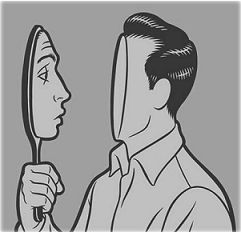
1379524090-self+other+smallWhen I was a child, I used to regularly freak myself out by the thought that one day I would no longer exist. How could I – my consciousness – simply disappear from the world, when to me, at least, it had always been there? Something about the disappearance of my self terrified me.

Looking back on it, it seems a little silly, since I won’t actually have the experience of not being conscious when it happens. But that sense of self – a sense that “I” exist in some fundamental, immutable way – is something pretty basic to the human experience.

As an adult, I’ve come to realize that it’s exactly that sense of the self as a concrete, identifiable thing that makes us suffer so much. And that the more we can release our grip on it, accept the “self” as a more fluid concept of ever-changing consciousness, the happier we’ll be.

Think about it. Much of our suffering comes from either regretting the past or worrying about the future. We regret the past because of a sense that “I” did something wrong – as if “I” were one immutable being to be constantly judged and evaluated. In fact, all of those judgments – of ourselves and of others – come from an assumption of a core “self” that we tend to see as good or bad, deserving of praise or blame. If there were no solid, core self, the judgments would lose a lot of their force. We might not like something we (or someone else) said or did, but that doesn’t have to entail a judgment about who we (or they) are. It’s a lot easier to let that go and move on.

The same for our worries about the future. What if I don’t get what I want – money, fame or love, for example? If “I” am not such a solid entity that I can judge as successful, attractive, or lovable, then not being those things is no longer such a tragedy. “I” am not a failure – maybe I just didn’t get something I wanted this time.

Too much sense of self actually makes it difficult for us to act and interact with others in the world: the more “self-conscious” we are the more paralyzed we feel.

Of course, it’s normal to have some sense of self, and even necessary for healthy functioning. As psychologist Rick Hanson explains in his book, Buddha’s Brain: The Practical Neuroscience of Happiness, Love and Wisdom, which I’ve written about before here, we’re born with a sense of self, which develops over time. This was important for evolutionary purposes, Hanson explains, since a sense of self is important to reading others and expressing ones own self effectively, which was necessary to form alliances, mate and keep children alive.

Today, a sense of self is still necessary to having a sense of continuity over time, forming relationships and taking responsibility for one’s actions. Indeed, Canadian philosopher Charles Taylor describes the modern sense of self as defined by how we judge actions and define a good life — our moral beliefs and values.

But that concept of self is not solid; it can change and develop over time. In the brain, “the self is continually constructed, deconstructed, and constructed again,” says Hanson, forming a conscious experience that seems coherent and continuous, but isn’t really. The self is ultimately composed of a myriad of causes and conditions, and continues to evolve in response to new causes and conditions, including those we create. Surrounding ourselves by loving people, living a healthy lifestyle, and practicing compassion, for example. The problem arises when we get caught up in seeing ourselves, or others, as fixed entities – bad or good, valuable or worthless. That’s all a fabrication of our minds.

Unfortunately, our culture encourages that. Politicians talk of other people as “evil,” and may brand whole groups of people, or cultures, as “barbaric,” backward or violent, often as a way of seeking or maintaining power. Companies try to sell us products by suggesting we’ll be someone better, more successful or more desirable if we have them. And on a personal level, we routinely apply those sorts of labels to ourselves. How often have you called yourself “stupid,” “lazy” or worse, simply for making a mistake or not getting something done?

Our judgments, our expectations and our hatred and anger pretty much all come from assumptions about the solidity of a “self” that are just flat-out wrong. As Hanson explains it:

from a neurological standpoint, the everyday feeling of being a unified self is an utter illusion: the apparently coherent and solid “I” is actually built from many subsystems and sub-subsystems over the course of development, with no fixed center, and the fundamental sense that there is a subject of experience is fabricated from myriad, disparate moments of subjectivity.

I probably wouldn’t have been comforted by that as a child, when I was freaking out about the fact that one day “I” would not exist. But as an adult, I see it as hopeful. Whatever or whoever we are we’re always changing, and have a lot of power to shape that process. We can dislike something we or someone else did, but let those judgments land lightly. They’re something to learn from and use to influence our future choices. But in most cases, “I” – or its eventual disappearance — is not something anyone needs to suffer over.

As Hanson puts it: “who you are as a person – dynamically intertwined with the world – is more alive, interesting, capable and remarkable than any self.”

The Neuroscience of Change: More Cause for Compassion

neuroscience
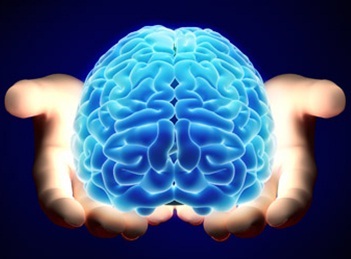
If you’ve ever wondered why it’s so hard to make lasting change, you may find comfort in knowing that one reason is human biology. Neurobiology, in particular. That’s not cause for despair: because with sustained effort and support, our brains are actually something we can change.

Ever since participating in a retreat on the neurobiology of yoga and Buddhism back in May, I’ve been fascinated by how our brains have developed over millennia to help us survive, but in many ways, particularly in the modern world, also cause us to suffer. And I’ve found it strangely soothing to know that we’re all in the same boat here: another reason to extend compassion to ourselves, as well as to others, even when we – or they – do things we really don’t like. It’s also a good reason to seek support for changes you want to make – whether from a coach, friend, teacher or mentor – because it’s really hard to make lasting change on your own.

The brain is a complicated organ, of course, and there’s lots to be learned about it. Interested readers may want to check out Rick Hanson’s excellent book, Buddha’s Brain: the Practical Neuroscience of Happiness, Love and Wisdom, which provides a great explanation and lots of brain-changing exercises. I’m also relying here on what I learned from Jim Hopper about this at his recent Kripalu retreat, and in his chapter in the book Mindfulness-Oriented Interventions for Trauma: Integrating Contemplative Practices (The Guilford Press).

The Cliffs Notes version of this material goes something like this: we’re hard-wired to flee from danger and pain and to seek pleasure and safety. So when the part of the human brain called the amygdala — often called the “reptilian brain,” because it’s the oldest part of the human brain, in an evolutionary sense — senses a threat, it creates a response of fear or aversion – what we commonly call a “fight or flight” response. Whereas in the wild “fight” might have meant trying to kill a predator or competitor, in modern life, we “fight” often by getting angry or judgmental – a way of trying to regain control. The flight response, meanwhile, kicks in our seeking circuitry: now we’re seeking an escape from the fear or other unpleasant feeling. That may lead us to suppress the feeling, or to mask it by indulging in some immediately pleasurable activity to escape it – for example, eating, drinking, or sex.

Although we tend to lament these “bad habits,” these instincts were actually useful when we lived in the wild as hunter gatherers, where we had to escape predators and be on the constant prowl for food (and sex) for the species to survive. But these now-ingrained habits unfortunately don’t work so well in modern life, where we’re largely cushioned from life-threatening predators, and food and other basic pleasures are, for many of us, often too easily obtainable. That leads to indulgence, feelings of guilt or other kinds of pain, and more suffering.

On top of that, again with the aim of species survival, we’re hard-wired to pay far more attention to things that frighten us or cause us pain than to things that feel good. This is the brain’s “negativity bias.” As Hanson explains in his book, that helped us survive ages ago, when one encounter with a predator would mean the end of us, so we had to be hyper-alert to threats and lived in frequent fear. In comparison, there were multiple opportunities to find food and mates, so if we paid less attention to those simple pleasures when we encountered them and just sought them out when we really needed them, we could still survive just fine.

But you can see how this all becomes a recipe for suffering today. For one thing, it means we tend to exaggerate our fears. Since change usually involves some fear of the unknown, it means we have a built-in bias against change, even if that change would be good for us. We also have a tendency to overlook or underestimate the opportunities for lasting, more meaningful pleasures – things like love, peace, playfulness and joy (what Hopper calls “true goods”) — because we’re distracted by fear. Plus, because we’re raised among similarly hard-wired humans, we’ve incorporated the fears of everyone around us, too, who likewise have an exaggerated sense of fear when it comes to change, and a tendency to underestimate deeper satisfaction. (Not surprisingly, marketers have learned to take full advantage of this — hence the relentless advertising of junk food, luxury goods, pharmaceuticals and fabulous vacation “escapes”.)

The result of these ancient and culturally reinforced tendencies is that it often feels easier to stay stuck – to avoid the fear of making a change, and respond to current dissatisfaction by seeking short-term easily-available immediate pleasures (which often lead to more suffering), rather than seeking longer-lasting deeper satisfaction, which may involve more effort and taking risks.

This all sounds pretty depressing. But take heart: neuroscientists have found we can actually alter how this circuitry functions. It just takes awareness, practice, and support.

That means paying attention to how our brain functions on autopilot (and how it affects the body) and trying to create more space between the thoughts and the impulsive (and often destructive) behavior that tends to follow them. It means practicing different ways of thinking, through contemplative practices like meditation, which can actually strengthen the prefrontal cortex – the part of our brain that allows us to reason and regulate fear and other responses — or visioning exercises that can help counteract the paralyzing impact of fear by motivating a desired change. (Hanson includes in his book a series of guided meditations designed to enhance certain parts of the brain, such as those responsible for positive emotions like love and empathy, and for skills like mindfulness and concentration.) And it means finding support from like-minded people who can help keep us on track – a trusted friend; a local meditation, yoga or support group; a skilled coach; or ideally, some combination of these.

Changing your brain — and changing your life — is possible.  But it’s very hard to do alone.