Don’t Tell Me What To Do

Since starting my training in Positive Psychology, I’ve been bombarded with all sorts of helpful suggestions about what I ought to do to make myself happier. “Make a daily list of five things you’re grateful for,” or “meditate every day,” or “exercise regularly,” or “clean your closets.” All good ideas, and I’m sure if I did them all I’d be a happier person. But as soon as someone else tells me what to do, I find myself resisting it. I know I’m not alone in this, because I’ve noticed that when I try to tell other people what to do to be happier, they don’t follow my instructions, either.

I guess I’ve always been suspicious of adopting other people’s rituals, which remind me of religion, which reminds me of manipulation. And I’m equally suspicious of the self-help gurus and celebrities that promise a quick fix of all my problems if I’ll just follow their five steps. It all feels fake and simplistic to me.

Still, as I’ve delved deeper into the scientific studies of how people actually make lasting change, I’ve become convinced by the experts’ view that the best way to change old habits or create new ones is by establishing new rituals. According to psychologists and neuroscientists, by practicing something new over and over, we create new neuropathways that eventually turn that new behavior into a pattern — a new habit. At that point, it takes much less energy (what we often refer to as “willpower”) to keep doing it.

It turns out human beings have very limited amounts of willpower. It’s why most people give up pretty quickly on New Year’s resolutions and other promises to change. The psychologist Roy Baumeister has studied this extensively, and found that creating new habits is far more effective than attempting to muster enough willpower each day to do something new. (His findings are explained in an excellent book he co-authored with journalist John Tierney called Willpower: Rediscovering the Greatest Human Strength.)

So while I’ve resisted adopting other people’s rituals, I realized recently during a week-long Positive Psychology training immersion that to get the benefits, I don’t have to follow someone else’s practice; I can create my own. In fact, I’m much more likely to adopt a new habit if it’s something I came up with that suits my schedule and temperament than something someone else devised to suit theirs. In other words, I don’t have to clean my closets or make daily gratitude lists or write in a journal if I don’t want to. But if there’s something I do want to change – whether it’s developing certain qualities or dropping bad habits – I’m far more likely to be successful if I establish a daily practice that moves me in that direction. And I can use the wealth of evidence about the effectiveness of rituals to create a ritual that feels not like I’m fulfilling some external obligation imposed upon me, but one that I’ve chosen and created to help me pursue my own goals.

It may sound exhausting to have to do something new every day. (Another reason I’ve generally resisted it.) But making one decision in advance to do something and making it part of your daily routine drastically reduces the amount of mental energy involved. It would take far more willpower to re-convince yourself of the value of a new practice and to have to re-commit yourself each day to doing it.

And the truth is, we’re always practicing something. If we’re not consciously deciding what it is we want to practice, then we’re usually letting old habits decide for us. And often those aren’t taking us where we want to go.

Willpower, then, is not something that requires heroic strength. It’s simply a choice to use our awareness to make conscious choices. Creating a new ritual doesn’t have to demand Herculean effort. As Anthony Trollope, the prolific writer who never wrote more than three hours a day said: “A small daily task, if it be really daily, will beat the labours of a spasmodic Hercules.” A new ritual can take all of five minutes to complete, depending on what it is and how you want to implement it. But it can make a big difference.

Don’t try to change too much at once, though. People who try to take on too many new behaviors at once often end up abandoning them all. Studies show that people who implement small changes, one or two at a time, are more likely to sustain them. Committing to them in the presence of someone else (such as a friend, spouse, coach, etc.), to whom you’ll feel accountable, also greatly improves your chances for success.

The biggest effort required is the decision to create and practice the new ritual itself. To overcome your inner skeptic’s resistance, make it your own.
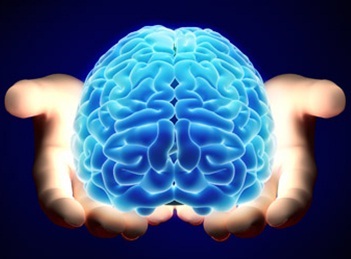


The Neuroscience of Change: More Cause for Compassion

neuroscience
If you’ve ever wondered why it’s so hard to make lasting change, you may find comfort in knowing that one reason is human biology. Neurobiology, in particular. That’s not cause for despair: because with sustained effort and support, our brains are actually something we can change.

Ever since participating in a retreat on the neurobiology of yoga and Buddhism back in May, I’ve been fascinated by how our brains have developed over millennia to help us survive, but in many ways, particularly in the modern world, also cause us to suffer. And I’ve found it strangely soothing to know that we’re all in the same boat here: another reason to extend compassion to ourselves, as well as to others, even when we – or they – do things we really don’t like. It’s also a good reason to seek support for changes you want to make – whether from a coach, friend, teacher or mentor – because it’s really hard to make lasting change on your own.

The brain is a complicated organ, of course, and there’s lots to be learned about it. Interested readers may want to check out Rick Hanson’s excellent book, Buddha’s Brain: the Practical Neuroscience of Happiness, Love and Wisdom, which provides a great explanation and lots of brain-changing exercises. I’m also relying here on what I learned from Jim Hopper about this at his recent Kripalu retreat, and in his chapter in the book Mindfulness-Oriented Interventions for Trauma: Integrating Contemplative Practices (The Guilford Press).

The Cliffs Notes version of this material goes something like this: we’re hard-wired to flee from danger and pain and to seek pleasure and safety. So when the part of the human brain called the amygdala — often called the “reptilian brain,” because it’s the oldest part of the human brain, in an evolutionary sense — senses a threat, it creates a response of fear or aversion – what we commonly call a “fight or flight” response. Whereas in the wild “fight” might have meant trying to kill a predator or competitor, in modern life, we “fight” often by getting angry or judgmental – a way of trying to regain control. The flight response, meanwhile, kicks in our seeking circuitry: now we’re seeking an escape from the fear or other unpleasant feeling. That may lead us to suppress the feeling, or to mask it by indulging in some immediately pleasurable activity to escape it – for example, eating, drinking, or sex.

Although we tend to lament these “bad habits,” these instincts were actually useful when we lived in the wild as hunter gatherers, where we had to escape predators and be on the constant prowl for food (and sex) for the species to survive. But these now-ingrained habits unfortunately don’t work so well in modern life, where we’re largely cushioned from life-threatening predators, and food and other basic pleasures are, for many of us, often too easily obtainable. That leads to indulgence, feelings of guilt or other kinds of pain, and more suffering.

On top of that, again with the aim of species survival, we’re hard-wired to pay far more attention to things that frighten us or cause us pain than to things that feel good. This is the brain’s “negativity bias.” As Hanson explains in his book, that helped us survive ages ago, when one encounter with a predator would mean the end of us, so we had to be hyper-alert to threats and lived in frequent fear. In comparison, there were multiple opportunities to find food and mates, so if we paid less attention to those simple pleasures when we encountered them and just sought them out when we really needed them, we could still survive just fine.

But you can see how this all becomes a recipe for suffering today. For one thing, it means we tend to exaggerate our fears. Since change usually involves some fear of the unknown, it means we have a built-in bias against change, even if that change would be good for us. We also have a tendency to overlook or underestimate the opportunities for lasting, more meaningful pleasures – things like love, peace, playfulness and joy (what Hopper calls “true goods”) — because we’re distracted by fear. Plus, because we’re raised among similarly hard-wired humans, we’ve incorporated the fears of everyone around us, too, who likewise have an exaggerated sense of fear when it comes to change, and a tendency to underestimate deeper satisfaction. (Not surprisingly, marketers have learned to take full advantage of this — hence the relentless advertising of junk food, luxury goods, pharmaceuticals and fabulous vacation “escapes”.)

The result of these ancient and culturally reinforced tendencies is that it often feels easier to stay stuck – to avoid the fear of making a change, and respond to current dissatisfaction by seeking short-term easily-available immediate pleasures (which often lead to more suffering), rather than seeking longer-lasting deeper satisfaction, which may involve more effort and taking risks.

This all sounds pretty depressing. But take heart: neuroscientists have found we can actually alter how this circuitry functions. It just takes awareness, practice, and support.

That means paying attention to how our brain functions on autopilot (and how it affects the body) and trying to create more space between the thoughts and the impulsive (and often destructive) behavior that tends to follow them. It means practicing different ways of thinking, through contemplative practices like meditation, which can actually strengthen the prefrontal cortex – the part of our brain that allows us to reason and regulate fear and other responses — or visioning exercises that can help counteract the paralyzing impact of fear by motivating a desired change. (Hanson includes in his book a series of guided meditations designed to enhance certain parts of the brain, such as those responsible for positive emotions like love and empathy, and for skills like mindfulness and concentration.) And it means finding support from like-minded people who can help keep us on track – a trusted friend; a local meditation, yoga or support group; a skilled coach; or ideally, some combination of these.

Changing your brain — and changing your life — is possible.  But it’s very hard to do alone.